Piecing together interior design knowledge from YouTube tutorials and Pinterest boards takes forever and leaves gaps. Structured online interior design courses give you the workflows and principles used in professional studios, so you can start taking on real client projects faster.
They cover the skills that actually matter: space planning, color theory, material selection, lighting design, rendering, and client communication. Many also teach essential software like SketchUp or AutoCAD, and increasingly, how to use AI interior tools that are reshaping the design process.
Here are the best interior design courses worth investing in this year.
Cost: Free (introductory); £74-£495 for certificate programs
Level: Beginner
Duration & format: 20 hours (introductory); variable for certificates
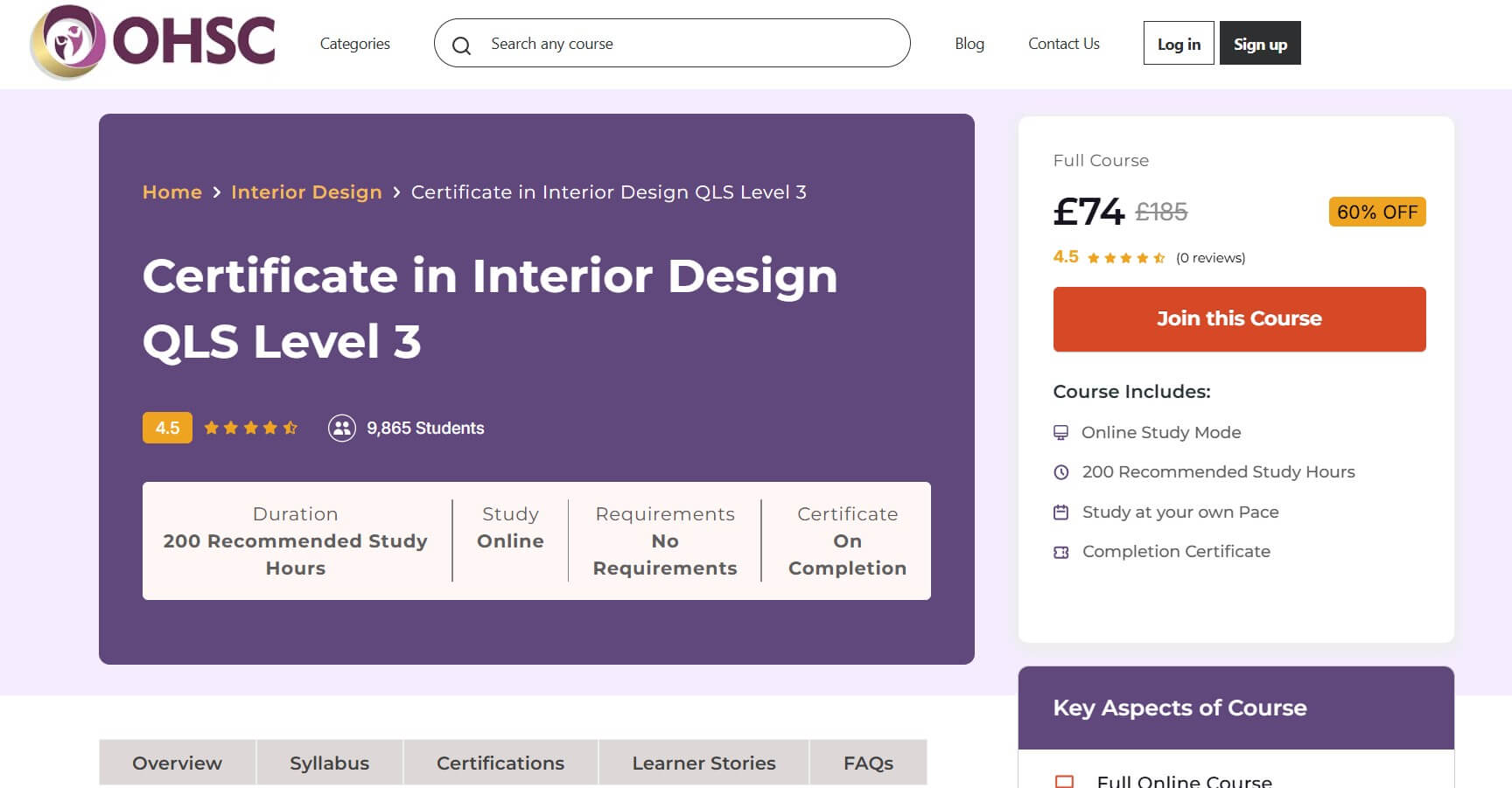
Oxford Home Study Centre offers a free 20-hour introductory course covering interior design fundamentals, including color, lighting, and decoration principles. Paid certificate, diploma, and advanced diploma options are available for those wanting formal credentials.
The free course provides a solid foundation for homeowners or those exploring the field. Paid programs offer tutor support with 90% of emails answered within 24 hours.
This is an excellent starting point if you’re unsure whether interior design is the right path. You can test the waters without financial commitment before investing in comprehensive training.
Cost: $120/year (MasterClass subscription)
Level: All levels
Duration & format: Video lessons, self-paced

Award-winning interior designer Kelly Wearstler shares her techniques for selecting color palettes, textures, backgrounds, and materials. Her focus is on contemporary and hotel design, with practical tips you can apply immediately.
The delivery method emphasizes participant interaction and creativity development. You’ll learn to analyze spaces and transform them using professional techniques.
MasterClass courses aren’t comprehensive training programs, but they offer unique access to how top designers think. This works well as a supplement to more technical interior design courses.
Cost: Contact for pricing (customised payment options available)
Level: Beginner to intermediate
Duration & format: 12 months, 100% online with live weekly classes
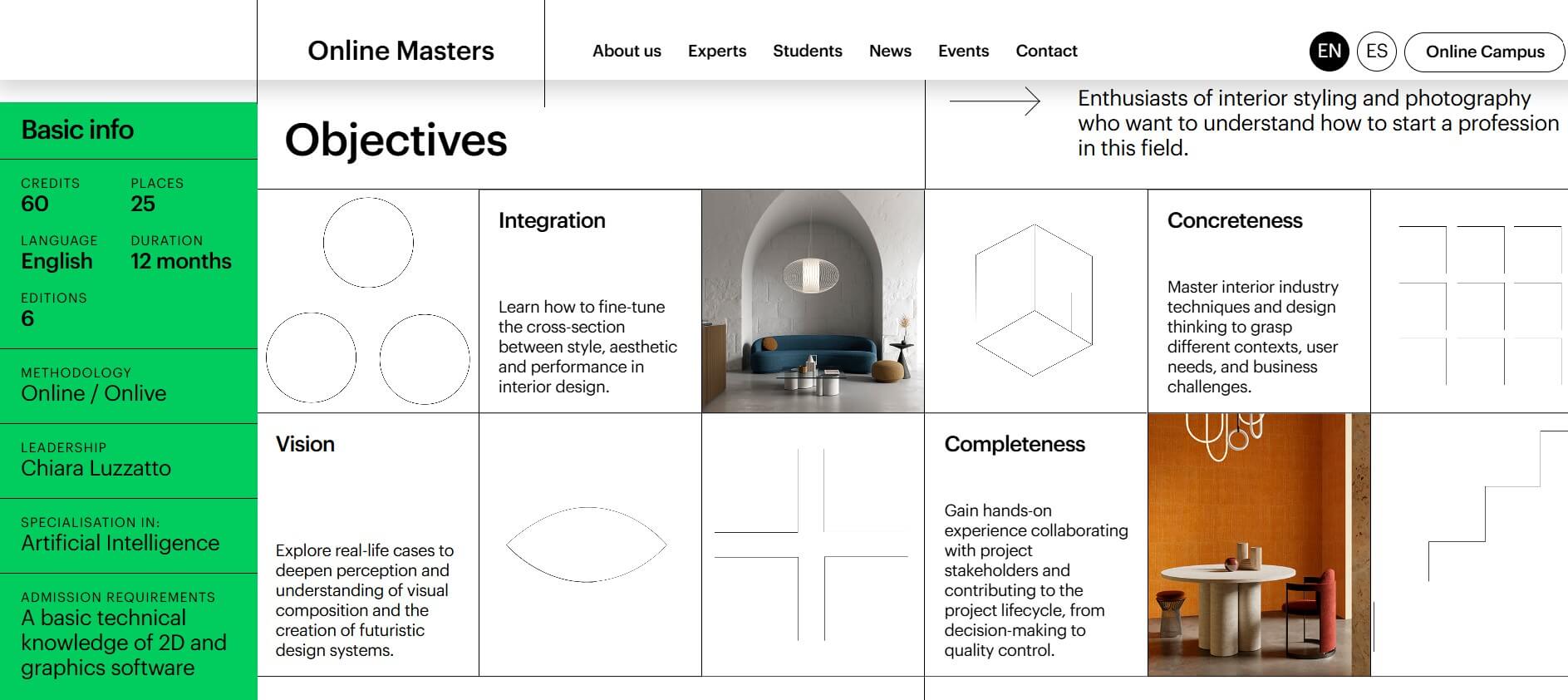
LABASAD (Barcelona School of Arts and Design) has established a global reputation for its "OnLive" methodology—fully online courses that still feel like face-to-face learning. Their English-taught Online Master in Interior Design and Hospitality is led by Italian architect Chiara Luzzatto. Classes are limited to 25 students for genuine interaction.
The program covers historical and cultural foundations, furniture and retail design, interior styling, photography, 3D visualisation, and render enhancement techniques. A dedicated AI specialisation module has been integrated into the curriculum, covering generative AI tools for design workflows.
LABASAD's instructors work simultaneously at companies such as IKEA, Netflix, and Adobe, bringing current industry practices directly into the classroom. With 87% of graduates reporting securing jobs or promotions upon completion, this program offers practical training that translates into career. The international student community spans Spain, the UK, Germany, Mexico, Belgium, and beyond.
Cost: $899 (full payment) or ~$1,199 with monthly instalments
Level: Beginner to intermediate
Duration & format: Self-paced (up to 18 months), online
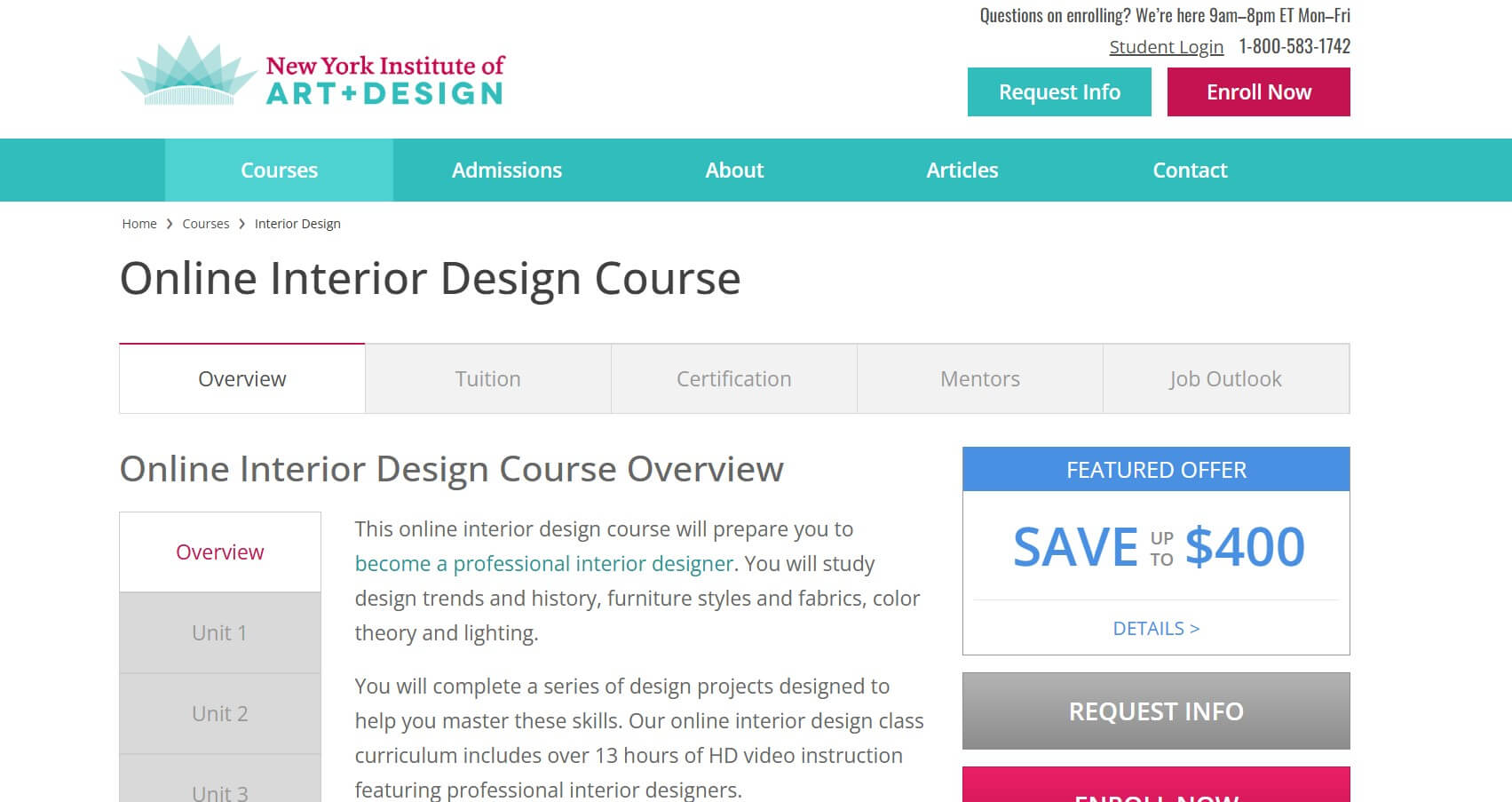
NYIAD's Complete Course in Interior Design has been training designers for over 30 years. The program is approved by the Designer Society of America (DSA), meaning graduates can apply for the RIDQC interior design certification—a respected credential that can set you apart when pitching to clients.
The course covers everything from design fundamentals and colour theory to furniture styles, lighting, and the business side of running a practice. You'll learn how to hold consultations, draw up contracts, and charge appropriately for your work.
What makes NYIAD stand out among the best online courses for interior design is its focus on practical, career-ready skills. You get assigned a professional mentor who reviews your projects and provides feedback. It's ideal if you want a comprehensive foundation without the cost of a traditional design school.
Cost: UK fee £895, non-UK fee $1,850
Level: Beginner
Duration & format: 8–10 months flexible online, 14-week fast-track via Zoom, or 12-week in-studio (UK/Dubai)

The NDA has been teaching interior design for over 35 years, with alumni in more than 100 countries. Their Professional Interior Design Diploma is accredited by AIM Qualifications (UK government-approved) and designed specifically to help you start your own business or join a design practice.
You'll study eight dedicated units covering:
One of the big NDA course advantages is its flexibility. Choose from fully online study, live Zoom sessions with tutors, or in-studio classes at their UK or Dubai locations. UK residents may qualify for government funding, reducing the cost to roughly half. Graduates also get a guaranteed place on NDA's Bachelor's degree if they want to continue studying.
Cost: $29.99/month (includes all LinkedIn Learning courses)
Level: Intermediate
Duration & format: 3+ hours, self-paced
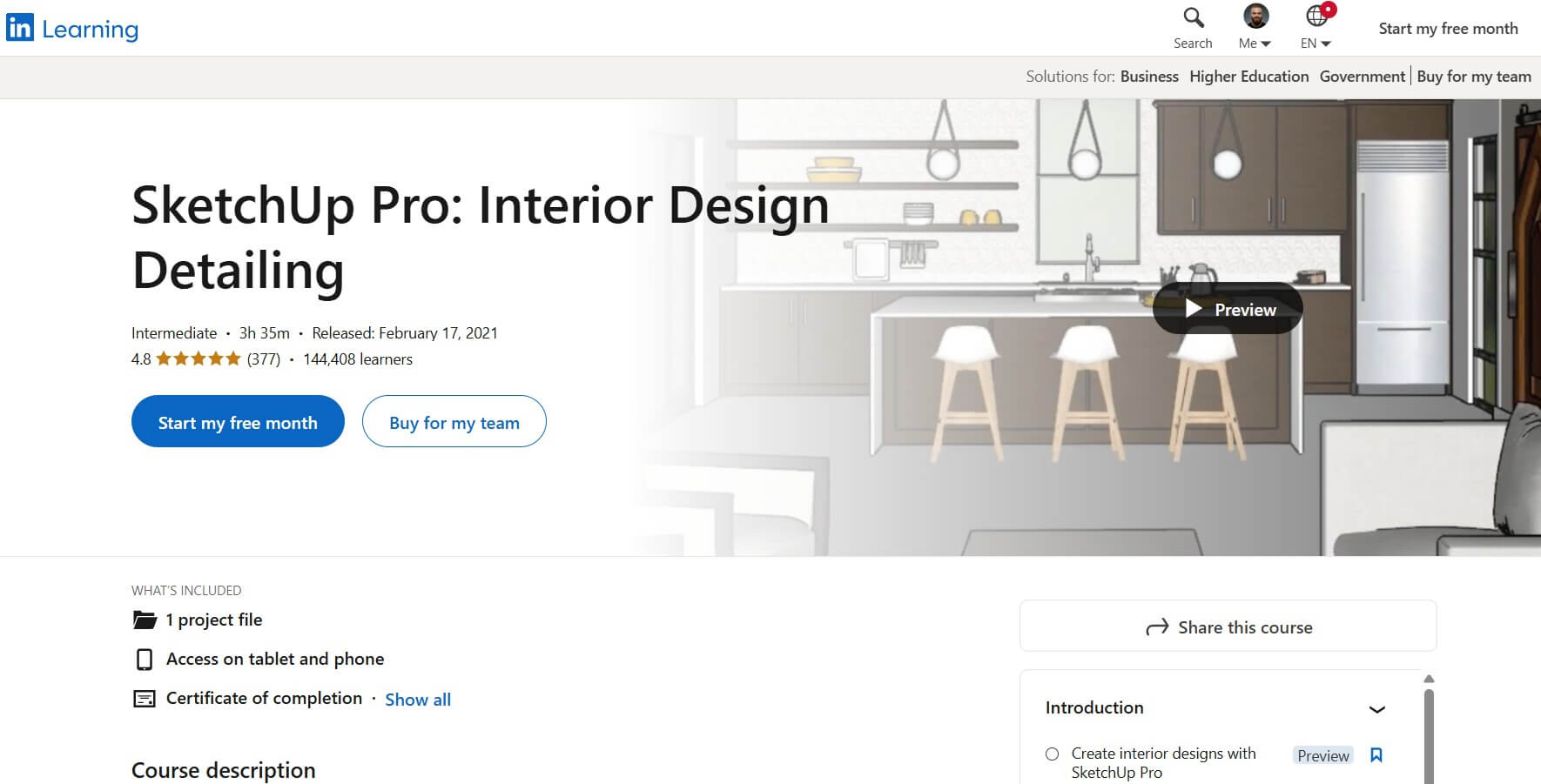
If you already know the basics of SketchUp, this course by interior design expert Rebecca Terpstra teaches you how to create professional interior designs from floor plans, build them up three-dimensionally, populate spaces with furniture and fixtures, and create documentation for clients or contractors.
You'll learn to work with imported .dwg files from AutoCAD and hand-drawn floor plans. The course includes custom exercise files that guide you through real design scenarios.
LinkedIn Learning's advantage is its integration with professional networking—completed courses appear directly on your LinkedIn profile. This is a solid choice for corporate teams with existing subscriptions or designers who want credentials visible to potential employers.
If SketchUp is your tool of choice, here's our full list of recommended SketchUp courses and tutorials.
Cost: Free to audit, $49 per course for certificate, or $39/month for full specialization\
Level: Beginner
Duration & format: 4 courses, approximately 7 months at the suggested pace

Offered by the Museum of Modern Art (MoMA), this specialization develops your understanding of design thinking through four popular courses: Modern Art & Ideas, Seeing Through Photographs, What Is Contemporary Art?, and Fashion as Design.
While not a traditional interior design course, understanding art history and contemporary design movements is essential for creating sophisticated spaces. You'll go behind the scenes at the museum and inside studios of artists, designers, and architects.
The program helps you develop critical thinking skills for discussing design and the confidence to make informed aesthetic choices. It's particularly valuable if you want to strengthen the conceptual side of your practice alongside technical skills.
Cost: $2,400
Level: Beginner
Duration & format: 12 weeks, in-person or hybrid online
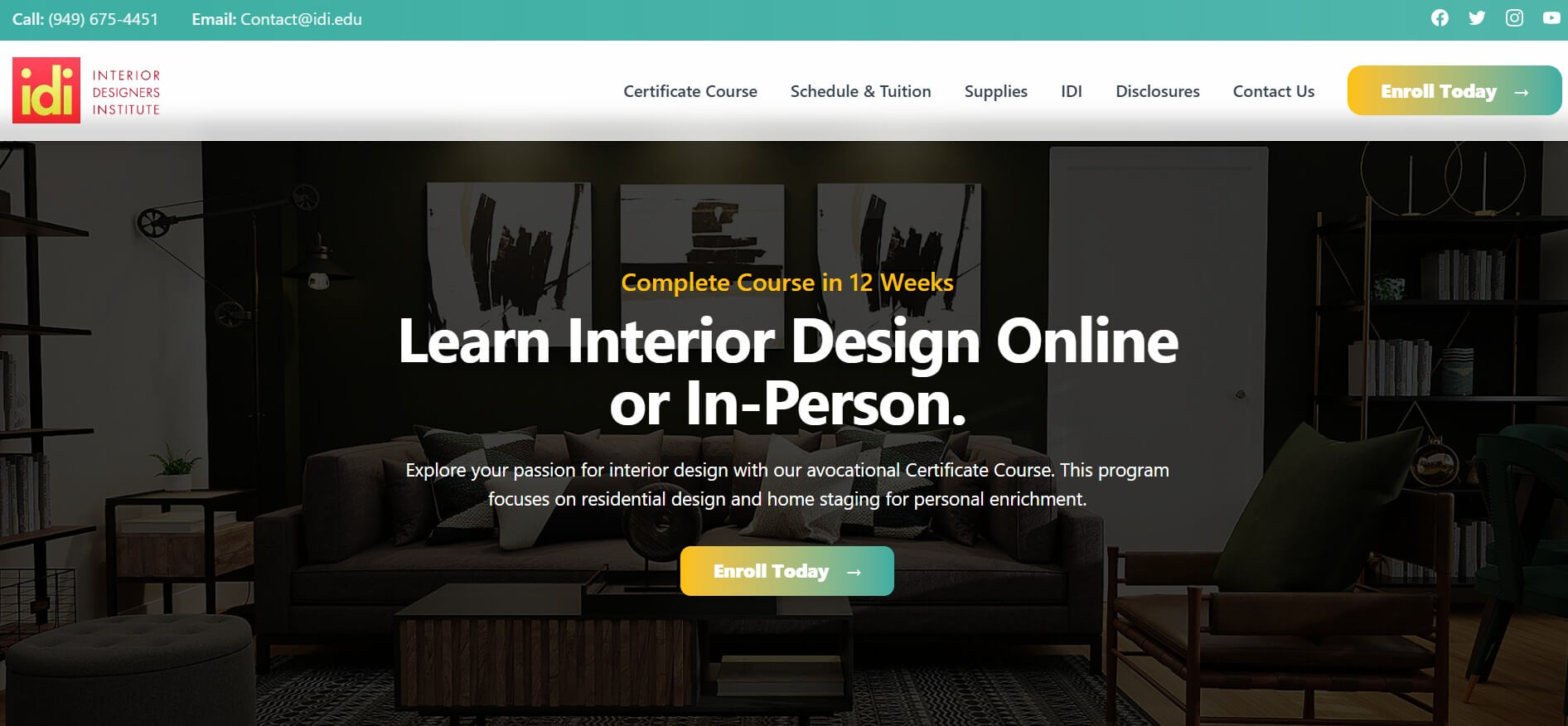
Based in California, the Interior Designers Institute offers live classes with actual teachers. Their Certificate Course explores residential design and home staging through both lecture and studio components.
Online classes are live with personalized attention. You can mix and match in-person and online sessions to create a schedule that fits your needs. The 12-week format provides structure while remaining manageable.
This is one of the few interior design courses for beginners that combines live instruction with flexibility. After completion, you receive a Certificate of Interior Design.
Cost: €2,800
Level: Intermediate to advanced
Duration & format: 3 weeks, full-time (75 hours)

The Istituto Europeo di Design in Milan offers intensive summer programs taught in English. It is one of Europe's most respected design schools, with campuses across Italy, Spain, and Brazil. Their specialization in interior design courses offers professional training with access to Italian design thinking and the "Made in Italy" methodology.
This program introduces current trends in interior design, with a focus on high-level showrooms and commercial spaces. Site visits to shops and exhibitions complement classroom learning. You’ll examine Italian interiors firsthand, learning the local approaches to brief, concept, design, and communication.
This is one of the best interior design courses for professionals who want exposure to European design thinking. It’s designed for final-year university students, recent graduates, or working professionals.
Cost: Approximately £400
Level: Beginner
Duration & format: Self-paced, up to 12 months to complete
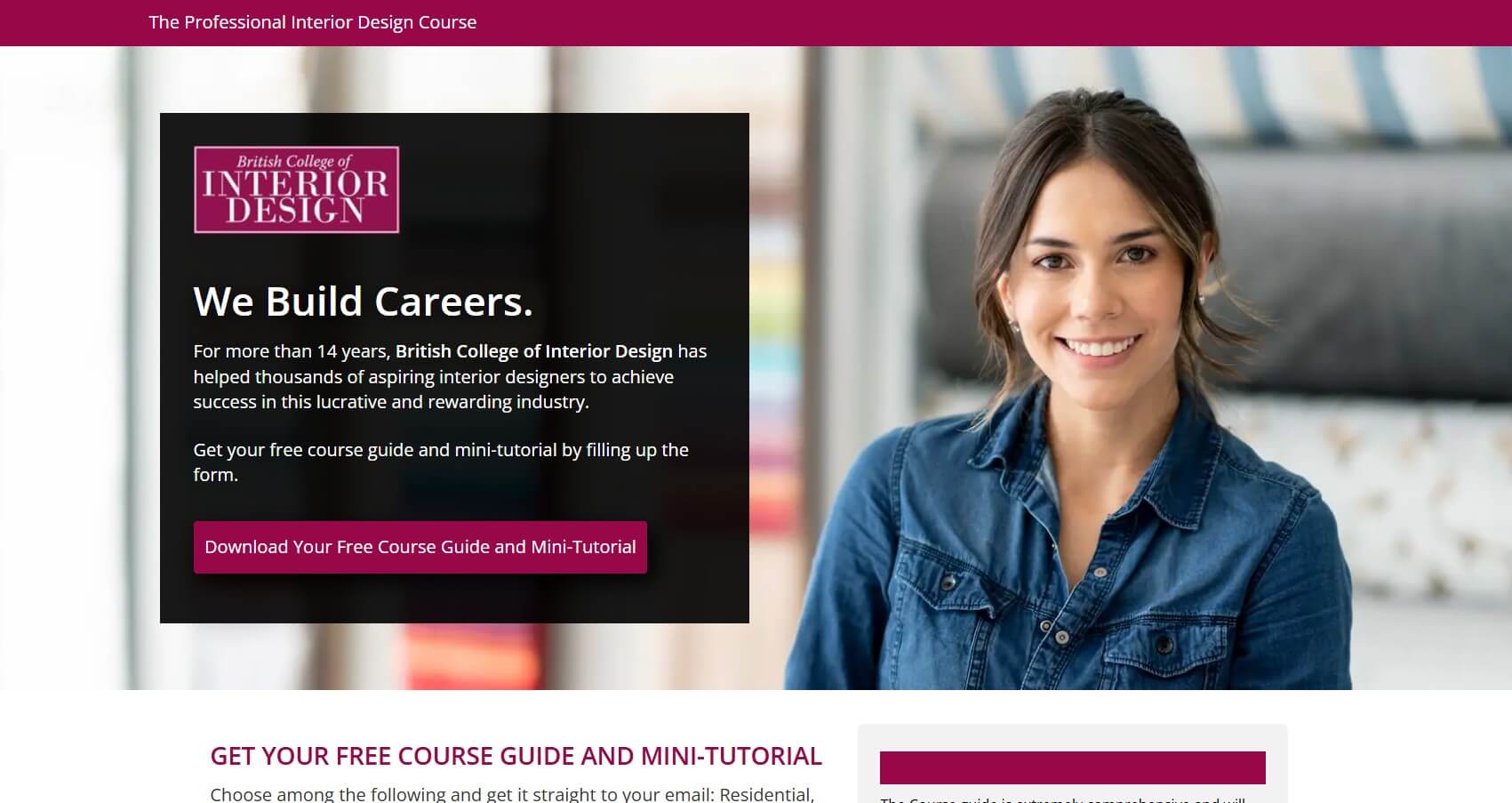
The British College of Interior Design has trained students in over 80 countries for more than 14 years. Their Professional Interior Design Course covers 12 modules, from design principles to running your own business.
You work on eight practical assignments that mirror real-world projects, covering color theory, space planning, furniture selection, and client management. Each assignment is reviewed by a working professional in the industry.
The course is IARC-approved and offers payment plans available in three- or six-month terms. It’s an affordable entry point into interior design courses, and fees are competitive compared to similar programs.
Cost: $1,199 upfront or $1,299 with installments
Level: Beginner
Duration & format: Self-paced, typically 3-6 months
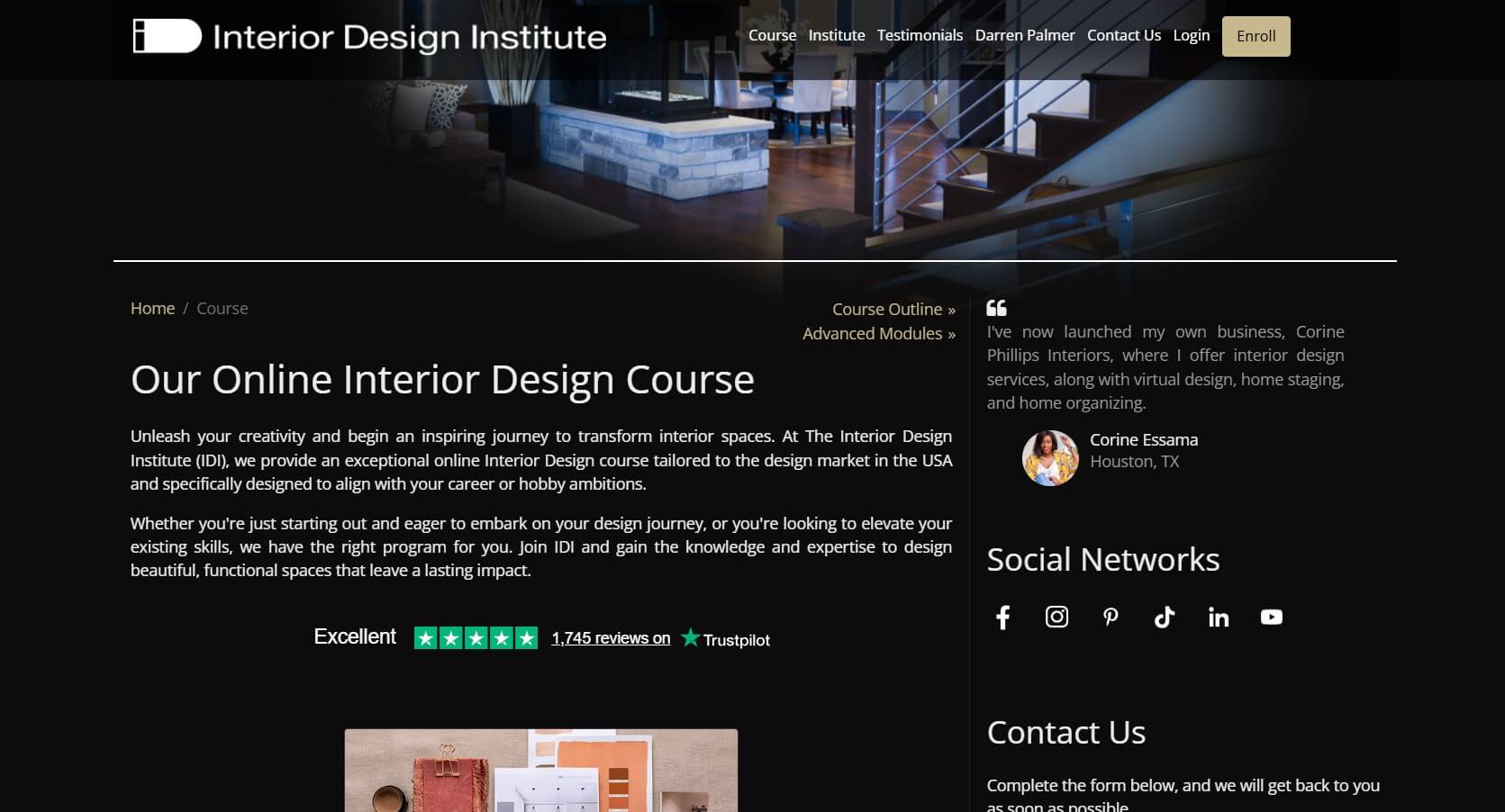
The Interior Design Institute (IDI) offers an internationally recognized online course with one-to-one tutor support. The curriculum covers all fundamentals needed to start working professionally in residential or commercial design.
Each student receives personalized feedback from experienced industry professionals. You’ll also gain access to online workshops, a student community, and 24/7 messaging support.
IDI offers a 7-day money-back guarantee, which makes it risk-free to try. This interior design course from home format works particularly well for those juggling work or family commitments.
Cost: $39.99/month subscription or $99 lifetime access
Level: Beginner
Duration & format: 16 weeks, self-paced
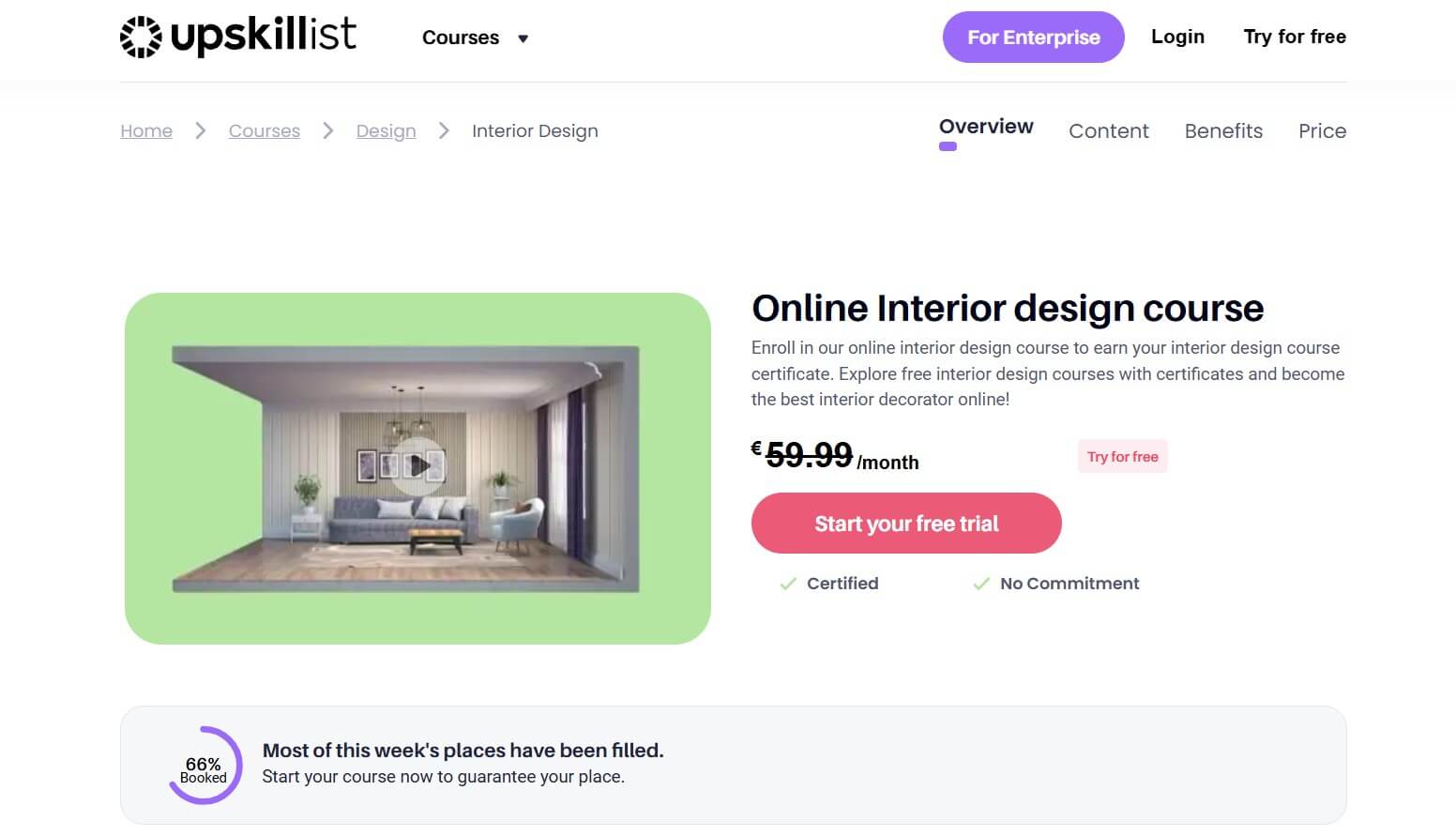
Upskillist offers a structured 16-week program with weekly lessons and flexible scheduling. The curriculum includes AI tools integration, reflecting current industry trends.
Students receive globally recognized certification upon completion, and the program includes continuous assessments to track progress. You get lifetime access to course materials for future reference.
The subscription model makes this one of the more accessible options for interior design courses and fees. It means you can complete multiple courses during your subscription period, if your time allows.
Cost: $5,000 (Certificate); $8,000 (Advanced Certificate)
Level: Beginner to intermediate
Duration & format: 18 weeks (Certificate) or 36 weeks (Advanced Certificate), live online
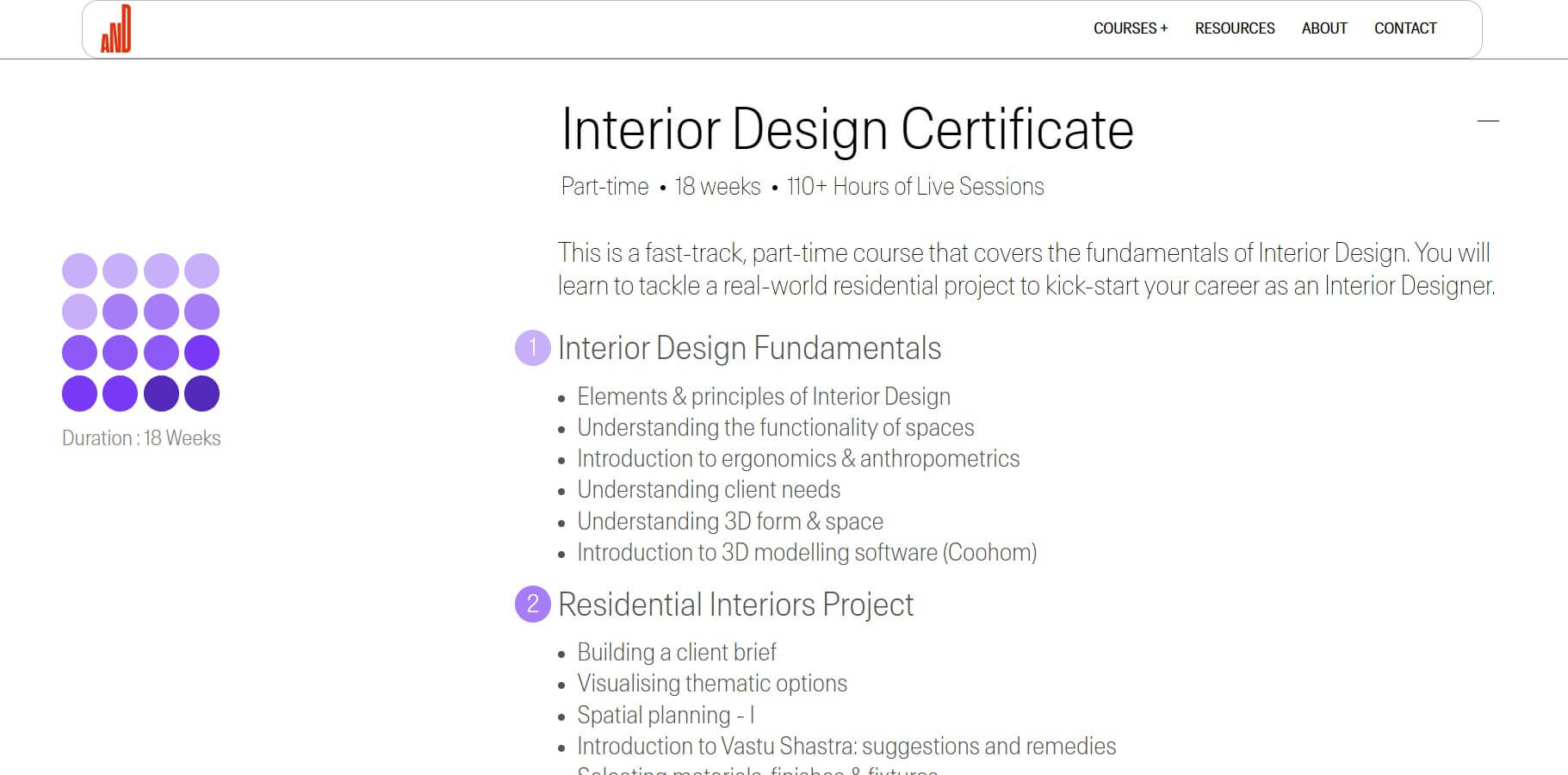
AND Academy offers live instruction from industry professionals with hands-on guidance from day one. Unlike self-paced courses, you’ll attend scheduled (online) sessions with real-time interaction.
The Certificate course covers spatial planning, interior styling, project workflow, and basic 3D rendering. Assignments include concept boards and residential projects that build your portfolio. The Advanced Certificate adds more complex projects and deeper technical training.
This is one of the more intensive options, but the live instruction format ensures you’re learning current industry practices. Flexible payment options make it more accessible.
Cost: $94.99 (frequently discounted to $10–25)
Level: Beginner
Duration & format: Self-paced, 79 lessons (10 hours total)
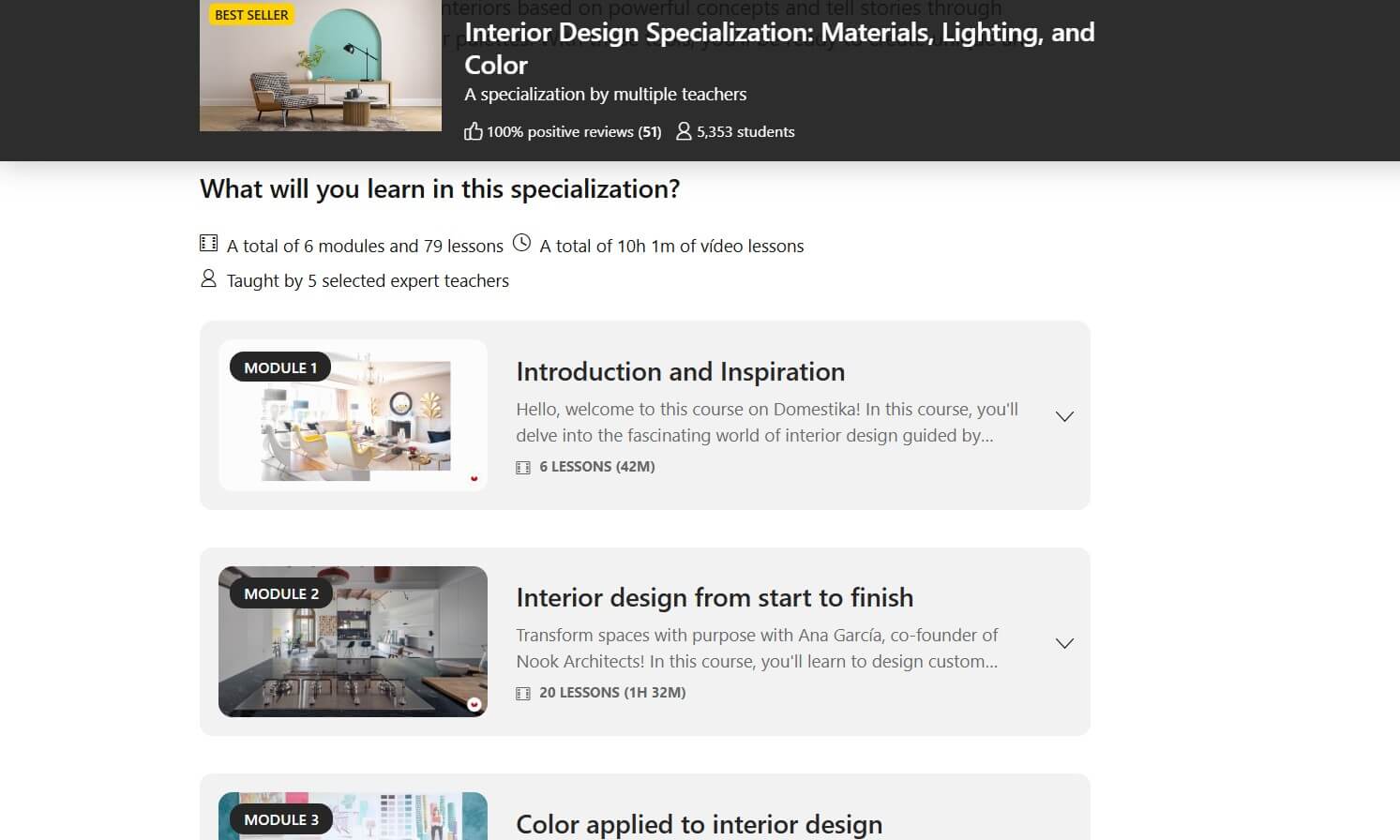
Barcelona-based Domestika has become a major force in creative education, with this Interior Design Specialization taught by five leading Spanish design professionals. You'll learn from Nook Architects (renovation projects), Masquespacio (materials and textures), Miriam Alía (colour theory), LumLum (lighting design), and WANNA (creative concepts).
The 6-module program covers the complete design process: from renovation planning through to material selection, colour palettes, lighting techniques, and developing creative concepts that give spaces their unique identity. Each module includes practical projects and downloadable resources.
What makes Domestika compelling is the calibre of instructors. They are working professionals whose projects appear in design publications globally. Plus, the platform's frequent sales make this an exceptional value, though course certificates require a Plus membership ($349/year for unlimited access).
Cost: $39.99 (varies with Udemy sales)
Level: Beginner
Duration & format: Self-paced, on-demand video
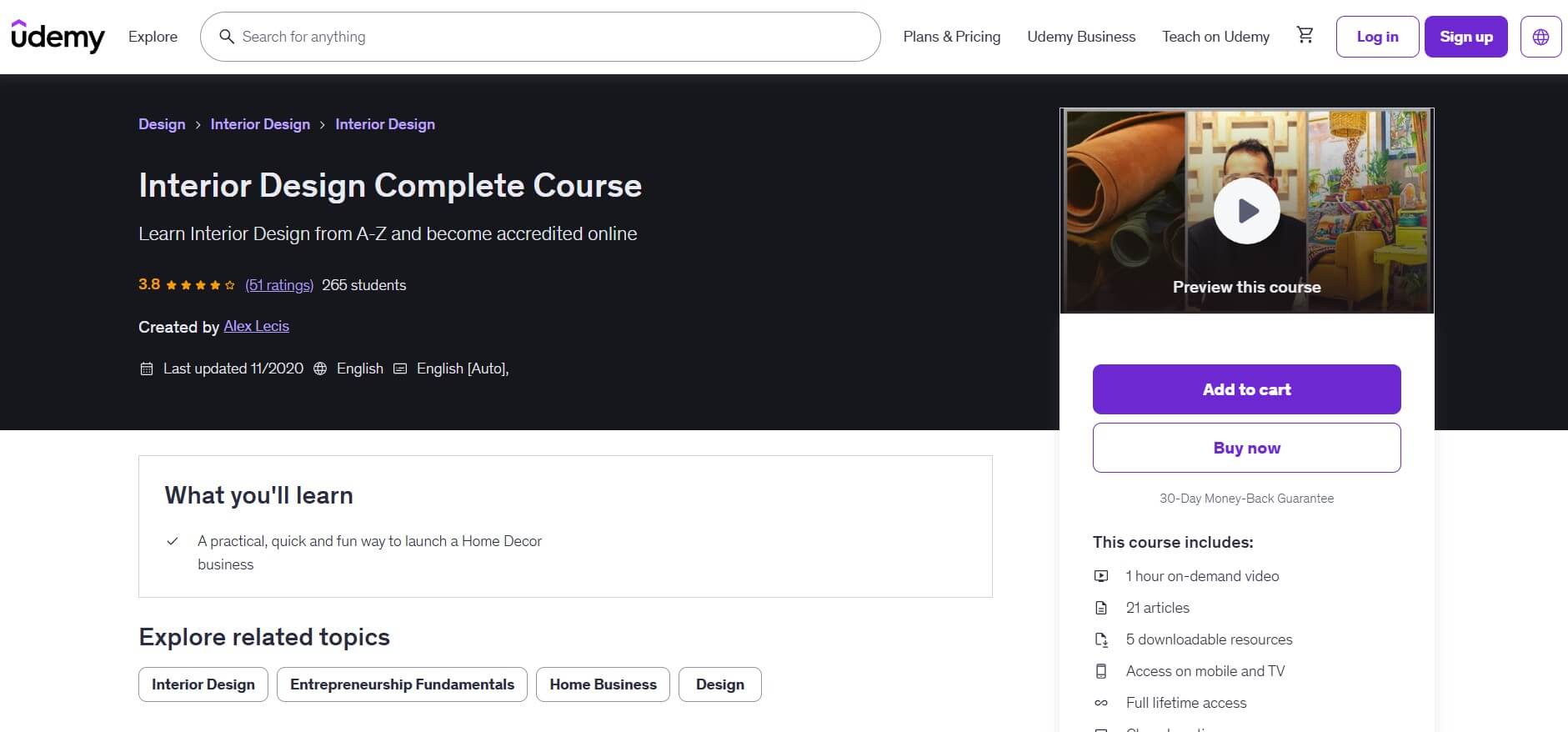
Alex Lecis, a freelance interior designer with experience in both the UK and US markets, created this fast-track course focused on design fundamentals and entrepreneurship. After teaching hundreds of designers globally, he packaged his workshop into an accessible online format.
The curriculum covers design history, project development, color principles, floor plans, space planning, wall and floor coverings, soft furnishings, furniture selection, lighting design, and professional practice. You’ll receive a certificate upon completion.
This is one of the better short courses on interior design for those who want quick, actionable knowledge without committing to a longer program. It’s particularly useful if you’re interested in launching your own design business. For those just exploring the field, this interior design course for beginners covers enough ground to determine if a career in design is the right fit.
For formal credentials: Choose accredited programs like NYIAD, NDA, or the Interior Design Institute. These provide certifications that clients and employers recognize. Accreditation matters if you’re planning to work with commercial clients or join an established firm.
For software skills: VDCI’s bundle covers the technical tools used in professional practice. Pair it with a fundamentals course for a complete education. Most studios expect proficiency in AutoCAD, SketchUp, and Photoshop at a minimum.
For budget-conscious learners: Start with free options like Oxford Home Study or MoMA’s Coursera courses, then invest in comprehensive training once committed. Many designers piece together their education from multiple sources over time.
For European design exposure: Consider IED Milan’s summer program or NDA’s UK-based courses. European design thinking often influences high-end residential and hospitality projects.
For live instruction: AND Academy and Interior Designers Institute offer real-time classes with direct feedback. This format works better if you struggle with self-paced learning.
Short online courses on platforms like Udemy typically run $15–100, though sales frequently drop prices to $10–25. Comprehensive certificate programs from institutions like NYIAD or NDA cost $500–$1,500, often including mentor feedback and industry certifications.
Short courses on Udemy or LinkedIn Learning can be completed in a weekend. Comprehensive certificate programs typically take 3–12 months, depending on your pace, with most students completing in 6–9 months while working full-time. Full diploma programs from institutions like NDA typically span 8–18 months.
LinkedIn Learning and Coursera certificates can be displayed to potential employers directly on professional profiles. For industry-recognised certificates that carry heavier weight with clients and employers, consider:
In most regions, you don't need a formal degree to work as an interior designer. Many successful designers, including well-known names like Lauren Liess and Nate Berkus, built their careers without traditional interior design degrees. However, some jurisdictions require specific certifications or licenses for certain types of work, particularly commercial projects or anything involving structural modifications.
Interior design focuses on the aesthetics and functionality of interior spaces—colour schemes, furniture selection, lighting, materials, and decoration. Interior architecture deals with structural elements within buildings, including modifying walls, ceilings, and built-in elements. If you're specifically interested in structural work, look for an interior architect course that includes technical drawing and building regulations.
Absolutely. Online interior design courses have matured significantly, with many programs now offering comprehensive training that rivals traditional classroom education. The key is choosing courses with practical project work, mentor feedback, and software training rather than purely theoretical content.