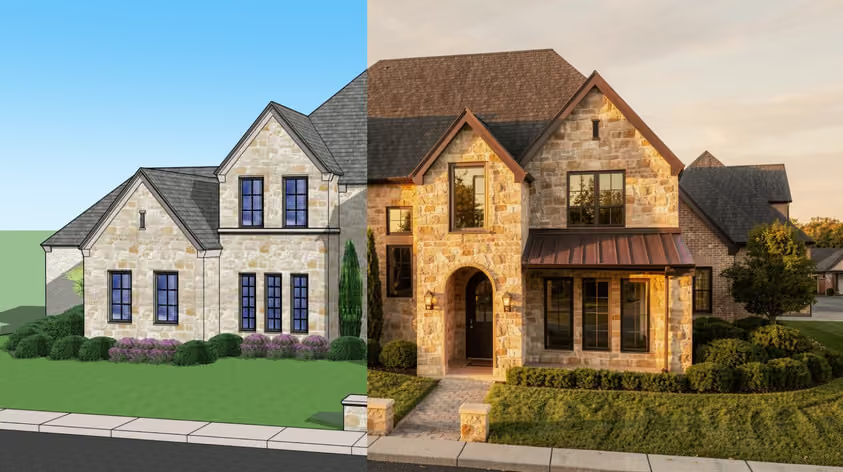
¿Es posible declarar un ganador en la batalla entre dos de los programas de renderizado en tiempo real más populares para arquitectos y diseñadores de interiores: D5 Render contra TwinMotion? Sí, si optas por categoría. Ambas herramientas permiten crear visualizaciones impresionantes con relativa rapidez, pero cada una es más adecuada para diferentes flujos de trabajo.
Esta guía explora lo que diferencia a los dos renderizadores para ayudarlo a elegir el correcto. Hemos comparado sus funciones, precios, facilidad de uso, tiempos y calidad de renderizado, librerías de assets, requisitos del sistema y mucho más.
Vamos.
D5 Render, desarrollado por la empresa china Dimension 5, se lanzó por primera vez en 2021 y ha ganado terreno rápidamente entre los arquitectos y los profesionales de la visualización 3D. Se basa en la tecnología NVIDIA RTX y utiliza el trazado de rayos y el trazado de rutas en tiempo real para ofrecer imágenes de alta calidad. La versión 3.0 se lanzó a principios de 2026.
Novedades de D5 Render en 2026
Render D5 3.0 en 2026, cambia gran parte del flujo de trabajo hacia la IA, lo que permite que el software genere materiales y coloque assets. Esta versión añade superficies con verdadero desplazamiento y una simulación atmosférica y ambiental más avanzada. También es posible crear objetos 3D sencillos a partir de imágenes de referencia. En un contexto práctico, esto significa una configuración de escena más rápida y un entorno más rico sin necesidad de modelar grandes contextos a mano.
Twinmotion se lanzó originalmente en 2005 y fue adquirido por Epic Games (creador de Unreal Engine) en 2019. Es ampliamente utilizado en las industrias de la arquitectura, la construcción, la automoción y el diseño de productos. Impulsado por Unreal Engine 5, utiliza Lumen para una iluminación global dinámica y un trazador de rutas integrado para obtener renderizados finales de mayor calidad.
Novedades de Twinmotion en 2026
En el momento de escribir esta guía, se mantiene la última actualización importante Twinmotion 2025.2 a partir del 30 de septiembre de 2025, con la próxima versión (2026.x) aún en desarrollo. El cambio clave con respecto al ciclo más reciente es la compatibilidad con Nanite, que permite a Twinmotion renderizar modelos extremadamente densos sin optimización manual. Las adiciones al flujo de trabajo, como las ventanas de paralaje, mejoran la profundidad interior, además de mejorar las herramientas de cámara y material.
| D5 Render | Twinmotion | |
|---|---|---|
| Precios | Gratis (Community); $38/mes o $360/año (Pro) | Gratis (ingresos <$1M); $373.80/año por usuario |
| Plan de prueba gratuito | Versión Community (ilimitada, no comercial) | Prueba de 30 días; gratis para empresas con ingresos <$1M |
| Facilidad de uso | Fácil | Fácil |
| Fotorrealismo | Alta | Moderada a alta |
| Tiempos de renderizado | Segundos a minutos | Segundos a minutos |
| Requisitos del sistema | Altos (solo Windows) | Altos (Windows y Mac) |
| Motor de render | GPU, ray tracing + path tracing en tiempo real | GPU, Lumen + Path Tracer (Unreal Engine) |
| Integración con software CAD | Plugins LiveSync (sincronización en tiempo real desde CAD/BIM) | Direct Link (sincronización unidireccional) |
| Librería de assets | 13.000+ (Pro); ~2.000 (Community) | 10.000+ integrados; ilimitados vía Megascans |
| Soporte VR/AR | VR básica (panoramas, XR Tour) | VR avanzada (soporte de auriculares, uso compartido en la nube) |
| Atención al cliente | Foro, base de conocimientos, tutoriales | Foro, documentación, comunidad Epic |
Ganador: empate
Tanto D5 Render como Twinmotion son elogiados por sus interfaces intuitivas y sus bajas curvas de aprendizaje.
D5 Render es fácil de aprender, por lo que puede esperar producir renderizados utilizables al final del primer día. La interfaz es limpia y está organizada de forma lógica. Además, los plugins LiveSync para SketchUp, Revit, Rhino, Archicad y otras herramientas te permiten ver los cambios de tu software de modelado reflejados en D5 de inmediato.
Twinmotion es igualmente accesible, con un flujo de trabajo de arrastrar y soltar que se basa en la lógica de la interfaz de usuario de los juegos. La aplicación de materiales a los objetos seleccionados automáticamente es más rápida aquí que en la mayoría de los renderizadores, y las herramientas de animación basadas en la cronología son intuitivas. Su función de enlace directo sincroniza los modelos de tu herramienta CAD con Twinmotion, aunque la sincronización es unidireccional; los cambios realizados en Twinmotion no se transfieren de nuevo.
Vale la pena señalar que no hay un ganador claro en este enfrentamiento entre D5 y Twinmotion, ni siquiera para principiantes. Ambas herramientas son lo suficientemente fáciles como para que los no especialistas las aprendan en cuestión de horas. La principal diferencia es el flujo de trabajo: D5 se parece más a un estudio de renderizado tradicional, mientras que Twinmotion se inclina por un generador de escenas en tiempo real.
Dicho esto, si no quieres perder tiempo en la iluminación y los materiales, MyArchitectAI se encarga de todo con un solo clic. Volveremos a ello.
Ganador: D5 Render (para empresas más pequeñas); Twinmotion (para empresas de menos de 1 millón de dólares)
D5 Render
D5 ofrece una versión comunitaria gratuita realmente útil para uso no comercial, sin límite de tiempo ni marca de agua. Para trabajos profesionales, el D5 Pro cuesta 38 dólares al mes o 360 dólares al año. D5 for Teams tiene un precio inicial de 75$ al mes por puesto (708$ al año por puesto) y añade funciones de colaboración, como proyectos compartidos y espacios de trabajo en la nube. Desglosamos los planes en la guía de precios de D5 Render.
Twinmotion
Esta herramienta es gratuita para estudiantes, educadores, aficionados y cualquier empresa que gane menos de 1 millón de dólares en ingresos brutos anuales. Esto incluye el uso comercial. Por encima del límite, los asientos individuales cuestan 373,80 USD al año. También puedes hacerte con Twinmotion como parte de la suscripción a Unreal por 1554$ al año, que incluye Unreal Engine y RealityCapture.
| D5 Render | Twinmotion | |
|---|---|---|
| Coste mensual | $38 (Pro); $75 (Teams) |
No disponible |
| Coste anual | $360 (Pro); $708/seat (Teams) |
$373.80/seat; $1,554/seat for Unreal Subscription |
| Plan gratuito | Community (no comercial) | Versión completa (ingresos <$1M) |
| Plan estudiante | Gratis (licencia educativa) | Gratis |
Ganador: D5 Render
Aquí es donde D5 Render vs Twinmotion muestra la brecha más clara. Los usuarios suelen citar a D5 como el que tiene el mejor realismo «listo para usar» entre los renderizadores en tiempo real.
D5 Render
La D5 produce constantemente resultados más fotorrealistas con menos esfuerzo manual. Su motor híbrido de trazado de rayos en tiempo real, combinado con el D5 GI (el sistema de iluminación global patentado por la herramienta), ofrece un rebote de luz preciso y sombras suaves. El modo de trazado de rutas lleva el realismo más allá para los renderizados finales, ya que maneja reflejos complejos y materiales translúcidos con alta fidelidad.
Twinmotion
Twinmotion ha recorrido un largo camino con la incorporación de Lumen y el Path Tracer de Unreal Engine 5. Lumen gestiona la iluminación global dinámica en tiempo real, lo que ya parece convincente durante la navegación. El Path Tracer ofrece imágenes fijas más nítidas con una iluminación más precisa, aunque solo funciona en Windows y necesita al menos 8 GB de VRAM. Aun así, los renderizados predeterminados de Twinmotion a veces pueden parecerse un poco a los de un motor de juego en comparación con los de la D5, especialmente en interiores, donde el comportamiento de la luz es más evidente.
Ganador: empate
Tanto D5 Render como Twinmotion ofrecen visualización en tiempo real, lo que significa que puedes ver actualizaciones instantáneas a medida que ajustas las escenas. Los tiempos de renderizado final dependen en gran medida del hardware y de la complejidad de la escena.
D5 Render
El D5 es rápido en todos los ámbitos. La interfaz gráfica en tiempo real mantiene las previsualizaciones fluidas y, gracias a la compatibilidad con DLSS en las GPU de NVIDIA, la ventana gráfica responde incluso en escenas densas. La exportación de las imágenes finales suele tardar entre unos segundos y un par de minutos.
Twinmotion
Twinmotion es igualmente rápido en el modo de tiempo real gracias al proceso de renderizado de Unreal Engine. Sin embargo, el modo Path Tracer es notablemente más lento, especialmente para las animaciones. Los usuarios informan de que renderizar un vídeo tutorial en 4K puede llevar horas, según la duración y la complejidad de la escena.
Ganador: Twinmotion (ecosistema); D5 Render (calidad integrada)
Si la calidad y la comodidad de la biblioteca integrada son lo más importante, la D5 tiene una ligera ventaja. Si necesitas acceder a un enorme ecosistema de recursos fotoescaneados, Twinmotion gana.
D5 Render Pro
Los más de 13 000 recursos de la biblioteca de D5 Pro incluyen vegetación, muebles, vehículos y personajes animados. La versión comunitaria incluye aproximadamente 2000 objetos. Como la biblioteca integrada de D5 está bien seleccionada y optimizada para el renderizador, los recursos se cargan rápidamente y tienen un aspecto realista. Con D5 Render 3.0, el nuevo mercado de D5 Works añade aún más modelos 3D preparados para AEC.
Twinmotion
En este aspecto de D5 Render contra TwinMotion, este último se mantiene firme con alrededor de 10 000 recursos integrados de arrastrar y soltar. Pero la verdadera ventaja es el ecosistema de Epic Games: se integra con Quixel Megascans (assets escaneados mediante fotogrametría) y Sketchfab, lo que te da acceso a cientos de miles de modelos y materiales adicionales de alta calidad. Esto por sí solo hace que la catálogo de assets de Twinmotion sea casi ilimitada.
Ganador: D5 Render
D5 Render
D5 ofrece una amplia colección de materiales PBR realistas. Los usuarios profesionales tienen acceso a la biblioteca completa, y la función AI Ultra HD Texture puede mejorar las texturas para tomar primeros planos. También puedes importar mapas de texturas personalizados para tener un control total de la PBR, incluidos el relieve, la rugosidad, la reflectividad, la metalidad y el desplazamiento.
Twinmotion
Twinmotion incluye una biblioteca y un sistema de materiales PBR integrados, y también integra Quixel Megascans para miles de superficies escaneadas. Sin embargo, las opciones de material integradas son más limitadas en términos de ajuste en comparación con la D5.
Ganador: empate
Ambas herramientas son sólidas en este sentido, aunque el sistema oceánico y las características de las nubes volumétricas del D5 le dan una ligera ventaja para los proyectos costeros y paisajísticos.
D5 Render
La herramienta D5 Scatter te permite pintar y colocar capas de vegetación con una ubicación aleatoria para paisajes de aspecto natural. Otras opciones incluyen controles meteorológicos avanzados, un nuevo sistema oceánico (a partir de la versión 3.0) con generación automática de costas y nubes volumétricas.
Twinmotion
Las herramientas Paint Vegetation y Path de Twinmotion también permiten llenar rápidamente las escenas exteriores con árboles o personas animadas. Además de eso, puedes cambiar las estaciones, ajustar la hora del día y añadir viento, lluvia o nieve.
Ganador: Twinmotion
Twinmotion
Si las presentaciones de realidad virtual y los recorridos interactivos son importantes para su flujo de trabajo, Twinmotion es la elección perfecta:
D5 Render
La D5 admite panorámicas de realidad virtual y la nueva función XR Tour (introducida en la versión Pro). Oficial documentos también enumeran las posibilidades de exploración de realidad virtual a través de auriculares compatibles con SteamVR, como HTC Vive y Oculus Rift, a través de su widget de realidad virtual. Aun así, las ofertas de realidad virtual de D5 siguen siendo más limitadas que las de Twinmotion.
Ganador: D5 Render (equipos)
D5
D5 for Teams añade proyectos compartidos con sincronización de versiones y un espacio de trabajo en la nube centralizado para la gestión de los recursos del equipo. Varios miembros del equipo pueden colaborar en el mismo proyecto simultáneamente, lo que supone una ventaja significativa para los estudios más grandes.
Twinmotion
Twinmotion Cloud permite compartir presentaciones con las partes interesadas a través de un enlace, pero no tiene herramientas de colaboración multiusuario integradas para trabajar en la misma escena. Los miembros del equipo deben trabajar en archivos separados.
Ganador: Twinmotion
Ambas herramientas hacen un uso intensivo de la GPU, por lo que la historia del hardware entre Twinmotion y D5 Render se reduce al soporte de la plataforma. D5 Render es solo para Windows y requiere una GPU con capacidad de trazado de rayos. Twinmotion funciona tanto en Windows como en Mac.
Por el lado negativo, tanto D5 Render como Twinmotion tienen problemas de estabilidad conocidos relacionados con la compatibilidad de los controladores de GPU. Los usuarios de la D5 informan de que los picos de VRAM pueden desestabilizar escenas complejas, mientras que Twinmotion puede tener problemas con la importación de grandes cantidades de mallas.
Antes de instalar cualquiera, comprueba los requisitos del sistema de D5 y los requisitos del sistema de Twinmotion.
| Requisitos del sistema | D5 Render | Twinmotion | ||
|---|---|---|---|---|
| Mínimo | Recomendado | Mínimo | Gama alta | |
| Sistema operativo | Windows 10 (v1809+) | Windows 10/11 | Windows 10/11 64-bit | Windows 10/11 64-bit |
| GPU | NVIDIA GTX 1060 6GB, AMD RX 6400, or Intel Arc A3 | NVIDIA RTX 3060 12GB or AMD RX 6700 XT 12GB | 6 GB VRAM, benchmark ≥ 10,000 (e.g., RTX 3060) | 12+ GB VRAM, benchmark ≥ 20,000 (e.g., RTX 5080) |
| CPU | Intel i5 / AMD Ryzen 5 | Intel i5-11400 or AMD Ryzen 3 5300G | Benchmark ≥ 2,000 | Benchmark ≥ 2,500 |
| RAM | 16 GB | 32 GB | 16 GB | 64 GB |
| Soporte Mac | No disponible | No disponible | macOS Monterey 12.5+ (Apple Silicon) | macOS 14.6.1+ (M2 Max or better recommended) |
Ganador: D5 Render
D5 toma la delantera en la comparación entre D5 Render y Twinmotion gracias a la gama más amplia de plugins de sincronización en vivo y al soporte de sincronización bidireccional.
D5 Render
Plugins de sincronización en vivo para SketchUp, 3ds Max, Revit, Archicad, Rhino, Blender, Cinema 4D y Vectorworks. La conexión refleja los cambios de tu software de modelado en D5 en tiempo real. D5 también importa formatos de archivo estándar como FBX, OBJ, SKP, 3DS, glTF y Alembic.
Twinmotion
La función Direct Link de Twinmotion se conecta al software CAD y BIM y es compatible con SketchUp, Revit, Archicad, Rhino, Vectorworks y más. Sin embargo, la conexión es unidireccional; los cambios realizados en Twinmotion no se sincronizan de nuevo. Otros soportes incluyen Datasmith y los formatos de archivo estándar para la importación, mientras que su estrecha integración con Unreal Engine es una ventaja si planeas convertir tus proyectos en flujos de trabajo completos de UE5.
Ganador: empate
D5 Render
D5 tiene un foro comunitario en crecimiento, una base de conocimientos detallada, tutoriales en vídeo y una presencia activa en las redes sociales. El soporte es responsivo, aunque algunos usuarios notan que la documentación sigue actualizándose al ritmo de las actualizaciones de funciones.
Twinmotion
Enorme ecosistema comunitario de Epic Games, que incluye documentación completa y los foros de la comunidad de desarrolladores de Unreal. Además, una amplia gama de tutoriales de terceros completa los recursos de aprendizaje.
Ganador: D5 Render
Este es uno de los principales diferenciadores en la comparación entre D5 Render y Twinmotion en este momento.
D5 Render
D5 ha invertido mucho en IA. Su suite actual incluye:
Twinmotion
A finales de 2025, Epic Games ha reconocido públicamente que los competidores han avanzado más rápido en la IA, citando preocupaciones en torno a la propiedad intelectual y el abastecimiento ético. El conjunto de funciones actual de Twinmotion se centra en Lumen y Path Tracer para la iluminación, además de Nanite para el manejo de la geometría. Si bien son tecnologías poderosas, no están impulsadas por la IA en el sentido generativo. Epic ha confirmado que las funciones de IA están previstas para futuras versiones de Twinmotion, pero aún no se han anunciado detalles específicos.
Tanto D5 Render como Twinmotion requieren que construyas escenas manualmente. Sus funciones de IA aceleran partes de ese proceso, pero tú sigues haciendo la mayor parte del trabajo.
MyArchitectAI adopta un enfoque fundamentalmente diferente. En lugar de facilitar su flujo de trabajo manual, se encarga de todo el proceso de renderizado por usted. Sube un diseño desde SketchUp, Revit, Archicad o cualquier otra herramienta y su motor de IA producirá un renderizado fotorrealista en menos de 10 segundos.
Se ejecuta en el navegador de cualquier dispositivo y cuesta 29 dólares al mes. Si necesita producir imágenes rápidas y listas para el cliente sin la sobrecarga de los renderizadores tradicionales, considérelo como un complemento ligero para su cartera.
Entonces, ¿qué renderizador deberías elegir: D5 Render o Twinmotion?
La respuesta depende de lo que más le importe a su flujo de trabajo:
O puedes resolver el dilema entre D5 Render y Twinmotion de esta manera:
D5 Render funciona muy bien si tus prioridades son el fotorrealismo más listo para usar y un conjunto cada vez mayor de funciones impulsadas por la IA. Incluye plugins de sincronización en vivo para la mayoría de las principales herramientas de CAD, y su trazado de rayos en tiempo real produce una iluminación impresionante con una configuración mínima.
Twinmotion es ideal para presentaciones interactivas y recorridos de realidad virtual, especialmente si tu equipo ya está integrado en el ecosistema de Epic Games. Basado en Unreal Engine, ofrece un excelente rendimiento en tiempo real y una enorme catálogo de assets a través de Megascans. Su nivel gratuito para empresas más pequeñas también es difícil de superar.