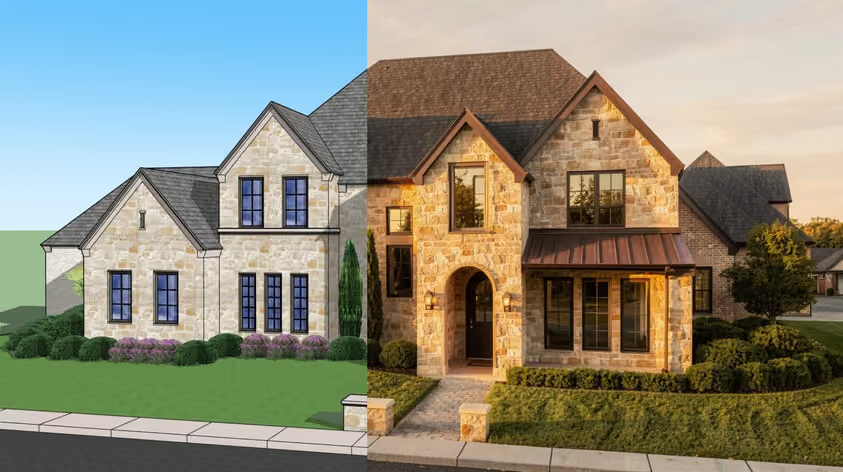
Se você está avaliando o D5 Render versus o Lumion para seu próximo projeto, provavelmente está cansado de vasculhar páginas de marketing que dizem que as duas ferramentas são “as melhores”. Sim, ambos são renderizadores em tempo real criados para arquitetos e prometem velocidade e facilidade de uso. Mas quando você começa a analisar os detalhes, como preços, requisitos de hardware, recursos de IA ou bibliotecas de ativos, a imagem muda.
Nesta comparação, detalhamos tudo o que você precisa saber sobre o D5 versus o Lumion em 2026 para que você possa fazer a escolha certa para sua empresa.
Antes de entrarmos no assunto, aqui está um resumo geral de como os dois renderizadores se comparam.
| D5 Render | Lumion | |
|---|---|---|
| Desenvolvedor | Dimension 5 (Weiwu Network Technology) | Act-3D (Países Baixos) |
| Lançamento | 2021 | 2010 |
| Motor de renderização | Path tracing em tempo real (DXR) | Rasterização + ray tracing opcional |
| Sistema operacional | Somente Windows | Somente Windows (plugin View funciona no Mac via SketchUp) |
| Versão gratuita | Sim (Community, não comercial) | Não (apenas teste gratuito de 14 dias) |
| Preço inicial | $38/mês (Pro) | $229/ano (View) / $1.149/ano (Pro) |
| Biblioteca de assets | 14.000+ (Pro) | ~10.000+ |
| Resolução máx. de imagem | 16K | 8K (16K with AI Upscaler) |
| Recursos de IA | Amplos (8+ ferramentas de IA) | Apenas AI Upscaler |
Vencedor: D5 Render — o rastreamento de caminho, por padrão, oferece um comportamento de luz mais preciso fisicamente, pronto para uso
É aqui que o debate entre o D5 Render e o Lumion fica interessante, porque as duas ferramentas usam abordagens de renderização fundamentalmente diferentes.
Ambas as ferramentas lidam bem com exteriores. O Lumion tem sido tradicionalmente o favorito para cenas ao ar livre, especialmente com sua biblioteca de ativos naturais profundos. O D5 fechou essa lacuna significativamente com ferramentas de dispersão processual e vegetação animada, apoiada por uma biblioteca crescente de predefinições de paisagem. Para interiores, o traçado de caminho do D5 oferece uma vantagem na forma como ele lida com a penetração da luz natural e os reflexos do material.
O D5 usa rastreamento de caminho em tempo real baseado no DirectX Raytracing (DXR). Isso significa que a luz se comporta fisicamente em sua cena, refletindo nas superfícies e projetando sombras suaves em tempo real. O resultado é um nível de realismo difícil de replicar apenas com a rasterização. O D5 também suporta NVIDIA DLSS para um desempenho mais suave da janela de visualização, mantendo a alta fidelidade visual.
O que há de novo no D5 Render em 2026
D5 Render 3.0 em 2026 impulsiona o fluxo de trabalho ainda mais em direção à IA, o que ajuda a gerar materiais e organizar ativos na cena. Você pode até mesmo criar objetos 3D simples a partir de imagens de referência. A atualização também traz superfícies de deslocamento real junto com controles de atmosfera e ambiente mais avançados. Na prática, isso significa uma configuração de cena mais rápida e ambientes mais completos.
O Lumion usa um pipeline baseado em rasterização como padrão, com traçado de raios opcional adicionado na versão 2023 e refinado até 2026. O traçado de raios no Lumion produz reflexos e sombras visivelmente melhores. Ainda assim, é mais desgastante para seu hardware, e nem todos os efeitos foram totalmente transferidos para o pipeline de rastreamento de raios ainda.
Em seu modo de rasterização padrão, o Lumion usa certos atalhos para calcular a luz refletida e os reflexos. Em parte, é por isso que ele renderiza tão rápido, mas também por que alguns usuários acham que ele não tem o fotorrealismo de ferramentas como o V-Ray. Se quiser ir mais a fundo nesse ponto, veja a nossa comparação entre V-Ray e Lumion.
O que há de novo para o Lumion em 2026
Lumion 2026 suaviza partes do fluxo de trabalho. A atualização expande a biblioteca de ativos com árvores fotogramétricas adicionais e modelos naturais atualizados para cenas ao ar livre. Uma nova ferramenta de posicionamento de área acelera o paisagismo ao distribuir a vegetação em grandes superfícies em uma única etapa. O AI Upscaler também foi refinado, permitindo ampliar renderizações em até 16K.
Vencedor: Lumion — ecossistema tutorial mais profundo, recursos comunitários mais amplos
Tanto o D5 Render quanto o Lumion foram projetados para serem acessíveis, especialmente em comparação com veículos pesados como V-Ray ou Corona. Mas a experiência do D5 versus o Lumion é diferente quando você está dentro do software.
A Lumion tem mais de uma década de tutoriais e conteúdo comunitário por trás dela. O D5 está se recuperando rapidamente, mas o Lumion ainda tem um ecossistema mais amplo de recursos de aprendizado.
Lumion
A interface do Lumion não mudou muito ao longo dos anos, e isso é bom. Se você já o usou antes, se sentirá em casa com a versão 2026. O fluxo de trabalho é de arrastar e soltar: importe seu modelo, extraia ativos da biblioteca, ajuste materiais e iluminação e renderize. O Lumion Pro também vem com modelos de projeto agora. Cenas pré-criadas para diferentes horas do dia, contextos suburbanos e configurações de interiores aceleram seu ponto de partida.
D5 Render
O D5 adota uma abordagem semelhante, embora sua interface de usuário pareça mais moderna. A visualização em tempo real é atualizada instantaneamente à medida que você ajusta materiais, iluminação ou posições da câmera. Um dos pontos fortes do D5 são suas predefinições de um clique para configurações de ambiente e clima. Se você quiser uma iluminação de hora dourada ou uma atmosfera de dia chuvoso, geralmente está a apenas um ou dois cliques de distância. A curva de aprendizado é suave, especialmente para usuários já familiarizados com renderizadores em tempo real.
Vencedor: D5 Render — suporta mais ferramentas de modelagem de forma nativa
Se você estiver importando modelos do seu software CAD ou BIM, a compatibilidade é importante. É aqui que a renderização D5 versus a Lumion se destaca em termos de integrações.
Ambas as ferramentas abrangem o essencial. O D5 vence em termos brutos com suporte para Blender, Cinema 4D e Vectorworks prontos para uso. O Lumion cobre bem as ferramentas de arquitetura mais usadas, mas se sua empresa trabalha com uma variedade maior de software 3D, o D5 oferece mais flexibilidade.
D5 Render
O D5 Render oferece plug-ins diretos do LiveSync para SketchUp, Revit, Rhino, Archicad, 3ds Max, Blender, Cinema 4D e Vectorworks. As alterações em seu software de modelagem são sincronizadas com o D5 em tempo real, portanto, não é necessário reexportar. Ele também suporta importações de arquivos FBX e Alembic.
Lumion
O Lumion Pro se conecta ao SketchUp, Revit, Rhino, Archicad e uma variedade de outras ferramentas CAD/BIM por meio de seus plug-ins LiveSync. A sincronização de material PBR foi aprimorada no Lumion 2026, então as mudanças de material nas ferramentas de modelagem agora se refletem imediatamente no Lumion. Atualmente, o Lumion View (o plug-in leve) funciona apenas com o SketchUp e o Revit, embora o suporte ao Archicad esteja disponível em breve.
Vencedor: D5 Render — mais de 14.000 versus mais de 10.000
Uma renderização é tão boa quanto os ativos com os quais você a preenche. Tanto o D5 Render quanto o Lumion entendem isso e vêm com grandes bibliotecas integradas.
Lumion
O Lumion Pro inclui mais de 10.000 modelos e materiais — móveis, pessoas, vegetação, veículos, materiais e muito mais. A biblioteca de vegetação é um destaque particular, incluindo árvores de fotogrametria hiper-realistas introduzidas nas versões mais recentes. A qualidade é consistentemente alta e o fluxo de trabalho de arrastar e soltar agiliza o preenchimento de cenas.
D5 Render
O D5 oferece mais de 14.000 ativos para assinantes Pro, abrangendo categorias semelhantes. Os modelos animados do D5 (árvores balançando, pessoas andando, veículos em movimento) são especialmente úteis para criar percursos dinâmicos. O D5 também tem uma ferramenta de dispersão dedicada com predefinições de paisagem, que permite pintar a vegetação em superfícies com controle sobre a densidade e a variedade de espécies. O D5 Works, um novo mercado, expande ainda mais a biblioteca com modelos criados pela comunidade.
Para a versão comunitária (gratuita) do D5, você tem acesso a cerca de 2.000 ativos, o que é suficiente para projetos pessoais e aprendizado, mas limitado para trabalhos comerciais. O Lumion não oferece um nível gratuito, então não há equivalente com o qual comparar.
Vencedor: empate — ambos somente para Windows, ambos dependentes da GPU, especificações similares recomendadas
Isso é um obstáculo para muitas empresas. O D5 Render e o Lumion não produzem um vencedor claro, pois ambos exigem hardware capaz e nenhum deles funciona de forma nativa no Mac.
Ambas as ferramentas são somente para Windows para funcionalidade completa. O pipeline de renderização do D5 é baseado no DirectX 12, que é incompatível com o macOS. O Lumion também não tem versão para Mac, embora o Lumion View seja executado no Mac por meio do plug-in SketchUp. Nenhuma das ferramentas é escalável com eficiência em várias GPUs. Detalhamos cada caso nos guias sobre os requisitos de sistema do D5 e os requisitos de sistema do Lumion.
| Componente | D5 Render | Lumion |
|---|---|---|
| OS | Windows 10 (v1809+) | Windows 10 (v2004+) or Windows 11 |
| GPU | NVIDIA GTX 1060 6GB, AMD Radeon RX 6000 lineup, or Intel Arc A5/A7 series (DXR-capable) | GPU scoring G3DMark 8,000+ (e.g., NVIDIA GTX 1060, AMD RX 580) |
| GPU recomendada | NVIDIA RTX 3060 (12GB VRAM) or AMD Radeon RX 6700 XT | NVIDIA RTX 3060, AMD RX 6700 XT, or equivalent (G3DMark 14,000+) |
| RAM | 32 GB recomendados | 32 GB recomendados |
| Armazenamento | SSD | SSD com pelo menos 105 GB livres |
Se sua empresa usa Macs, ou se você prefere não investir em estações de trabalho de última geração, convém considerar alternativas baseadas em navegador (falaremos mais sobre isso mais tarde).
Vencedor: D5 Render — $360/ano versus $1.149/ano, além de um nível gratuito genuinamente utilizável
O preço é onde a diferença entre o D5 Render e o Lumion aumenta. O D5 Pro a $360/ano custa menos de um terço do Lumion Pro a $1.149/ano. Além disso, a versão comunitária gratuita do D5 permite que você avalie o software sem limite de tempo, o que é algo que a Lumion não oferece (seu teste gratuito dura apenas 14 dias).
A Lumion também não oferece cobrança mensal. Você está preso a compromissos anuais ou de 3 anos. O D5 oferece a opção de pagar mensalmente se precisar de flexibilidade.
| Plan | D5 Render | Lumion |
|---|---|---|
| Grátis / Básico | Community: Grátis (uso não comercial, ~2.000 assets) | View: $229/ano (plugin para fases iniciais de projeto para SketchUp e Revit) |
| Pro | $38/mês ou $360/ano por usuário | $1.149/ano por usuário |
| Teams / Studio | $59/mês por usuário ($708/ano), mínimo 2 usuários | Studio: $1.499/ano por licença flutuante (inclui Pro + View) |
Para profissionais individuais ou pequenas empresas, o preço da D5 é muito mais fácil de justificar. O Lumion tende a fazer mais sentido para estúdios maiores que cobram os custos de renderização dos clientes e precisam do reconhecimento de marca que vem com isso.
Vencedor: Lumion — histórico mais longo, mais efeitos cinematográficos, Lumion Cloud para avaliação de clientes
Se você produz vídeos passo a passo ou apresentações animadas para clientes, as duas ferramentas nesta comparação entre o D5 Render e o Lumion podem lidar com eles, cada uma à sua maneira.
Lumion tem mais maturidade aqui com uma gama mais ampla de efeitos cinematográficos. O rastreamento de caminho híbrido em tempo real do D5, no entanto, significa que a qualidade da animação geralmente é maior quando pronta para uso, sem a necessidade de alternar modos de renderização separados.
D5 Render
O D5 suporta saída de vídeo 4K com animação de câmera baseada em quadros-chave e animação de fases para sequências de construção. Recursos animados, como pessoas e veículos, dão vida às suas orientações. Seu editor de vídeo integrado é simples, e o rastreamento de caminhos em tempo real significa que o que você vê na janela de visualização normalmente é o que você obtém na saída final. O D5 também suporta passeios de realidade virtual e apresentações espaciais.
Lumion
O Lumion Pro está bem estabelecido para animações, suportando a criação de caminhos de câmera, transições de hora do dia, efeitos climáticos e panoramas de 360°. A versão 2026 adicionou ferramentas aprimoradas de posicionamento de áreas para preencher rapidamente grandes espaços ao ar livre, o que é útil para projetos paisagísticos com muita animação. O Lumion Cloud agora permite que você compartilhe imagens renderizadas diretamente com os clientes para análise e marcação.
Vencedor: D5 Render com mais de 8 ferramentas de IA
Essa é sem dúvida a parte mais interessante da comparação entre D5 Render e Lumion em 2026 e a área em que as duas ferramentas mais divergem.
D5 Render
O kit de ferramentas de IA da D5 Render é extenso. A partir da versão 3.0, ele inclui:
O D5 Lite, seu novo plug-in do SketchUp, adiciona a conceitualização de IA ao rastreamento de caminhos em tempo real. Você pode passar de um modelo de massa aproximada para uma imagem conceitual estilizada sem sair do SketchUp.
Lumion
A oferta de IA da Lumion é mais limitada. O principal recurso de IA no Lumion 2026 é o AI Upscaler, que agora suporta aumento de escala 2x e 4x (resolução de até 16K) usando mapas normais e de profundidade. É bom no que faz: produzir ampliações prontas para impressão a partir de renderizações de baixa resolução. Mas, em comparação com o amplo pacote de IA da D5, é uma ferramenta de propósito único.
Se a aceleração do fluxo de trabalho com inteligência artificial é importante para sua empresa, a D5 tem uma clara liderança aqui. A força da Lumion está em seu fluxo de trabalho tradicional refinado, não na inovação da IA.
Se a velocidade e a simplicidade são mais importantes para você do que a criação manual de cenas, ferramentas como My Architect AI adote uma abordagem completamente diferente.
Em vez de configurar cenas e ajustar materiais manualmente, faça o upload do seu design (do SketchUp, Revit, Archicad ou qualquer ferramenta CAD) e deixe o mecanismo de IA lidar com a visualização. Ele fornecerá resultados fotorrealistas em menos de 10 segundos, com curva de aprendizado zero.
O MyArchitectAI é executado inteiramente em seu navegador, portanto, não há requisitos de hardware ou instalações. Melhor ainda, ele funciona em Mac, Windows, tablets e telefones. Por $29/mês para renderizações ilimitadas, custa uma fração do D5 ou do Lumion.
MyArchitectAI não substitui renderizadores completos de construção de cenas. Você ainda não criará animações personalizadas ou orientações de realidade virtual com ele. Mas para apresentações rápidas para clientes e iterações de design, ele preenche uma lacuna que nem o D5 nem o Lumion abordam particularmente bem. Muitas empresas o usam junto com um renderizador tradicional: MyArchitectAI para agilizar o desenvolvimento do design e D5 ou Lumion para resultados finais e sofisticados.
Vencedor: Lumion — A análise da nuvem com links voltados para o cliente e sem necessidade de login é mais prática para a maioria das empresas no momento
À medida que os estúdios crescem e o trabalho remoto se torna padrão, a colaboração é importante. Ambas as ferramentas estão investindo em colaboração, embora de ângulos diferentes. O D5 se concentra na construção colaborativa de cenas, enquanto o Lumion se concentra na revisão colaborativa e no feedback.
D5 Render
O D5 for Teams inclui projetos compartilhados com sincronização de versões e um espaço de trabalho na nuvem para compartilhamento de recursos da equipe. Requer um mínimo de dois assentos a $75/mês cada. Os recursos de sincronização em tempo real permitem que os membros da equipe trabalhem em cenas que permanecem coordenadas em todas as estações de trabalho (embora não de forma tão abrangente quanto as plataformas BIM).
Lumion
O Lumion Cloud permite fazer upload de renderizações e compartilhá-las via link. Os clientes podem revisar com marcações visuais e histórico de versões sem precisar de uma licença ou login do Lumion. O Lumion Studio também adiciona licenças flutuantes, que podem ser compartilhadas entre membros da equipe que nem todos precisam de acesso simultaneamente.
Vencedor: Lumion — 15 anos de profundidade de ecossistema são difíceis de igualar
Se você valoriza um ecossistema de suporte grande e estabelecido, o Lumion tem a vantagem. Se você se sente confortável com uma comunidade menor, mas entusiasmada e responsiva, o D5 não o decepcionará.
Lumion
A Lumion existe desde 2010 e construiu uma grande comunidade. Seus extensos tutoriais oficiais e uma base de conhecimento bem mantida são apoiados por revendedores autorizados que fornecem suporte localizado. Até mesmo a equipe de suporte interna da Lumion é composta por arquitetos e especialistas em visualização.
D5 Render
D5 é mais jovem, mas está crescendo rapidamente. Seu fórum comunitário está ativo, tutoriais e webinars oficiais são publicados regularmente e oferece um programa de certificação para usuários e instrutores. A D5 também realiza eventos comunitários regionais e tem parcerias com revendedores em vários países.
Então, onde essa análise do D5 Render versus Lumion deixa você? Aqui está um guia rápido.
Escolha Render D5 se:
Escolha Lumion se:
Considere uma ferramenta de IA baseada em navegador, como MyArchitectAI, se:
A comparação entre o D5 Render e o Lumion em 2026 parece diferente do que era há alguns anos.
A Lumion ainda tem uma marca mais forte e um ecossistema maior. No entanto, o D5 construiu silenciosamente um renderizador com a capacidade de igualar ou até mesmo exceder o Lumion em qualidade de renderização e recursos de IA por uma fração do custo. A licença anual da Lumion custa aproximadamente três vezes o que você pagaria pelo D5 Pro, e o D5 inclui uma versão gratuita.
Para empresas que já investiram em uma ou outra, a mudança tem custos reais. O treinamento de equipes e a reconstrução de bibliotecas de ativos levam tempo.
Mas para quem escolhe entre a combinação de renderização Lumion e D5 pela primeira vez, o D5 é um argumento forte. Combine-o com uma ferramenta de IA como o MyArchitectAI para aqueles momentos urgentes do cliente, e você terá um fluxo de trabalho de visualização rápido e acessível.