Kostenloser KI-Textur-Generator

Upscale Z-Image images to 4K in under 15 seconds. Also available in API.
Z-Image is an open-source image model family from Alibaba’s Tongyi Lab, released under Apache 2.0. MyArchitectAI is not affiliated with Alibaba or Tongyi Lab. This tool upscales images from Z-Image, Z-Image Turbo, or any other AI image generator.

How to upscale Z-Image images

01

Upload your image

Drag in a JPG, PNG, or WebP file, or click to browse. There are sample renders if you just want to test it. No account needed.
02

Pick the upscale factor

2x doubles each dimension, which covers most screen and presentation use. 4x takes a 1024px Z-Image Turbo output to 4096px, enough for print.
03

Download the result

It takes about 15 seconds to upscale your image. Compare before and after with the slider, then download the full-resolution file. The first one is free, no signup.

So verwenden Sie den KI-Texturgenerator

Danach können Sie die KI-generierte Textur auf Ihr Design anwenden, wenn Sie es mit MyArchitectAI rendern.

That’s fine on screen and short of what print wants. A2 at reasonable DPI, a portfolio book, a competition board: all of them need more pixels than the model will give you. The usual community fix is an upscale pass in a ComfyUI workflow. This page does the same job, minus the workflow: upload, pick 2x or 4x, download. Nothing to install, no VRAM to budget.

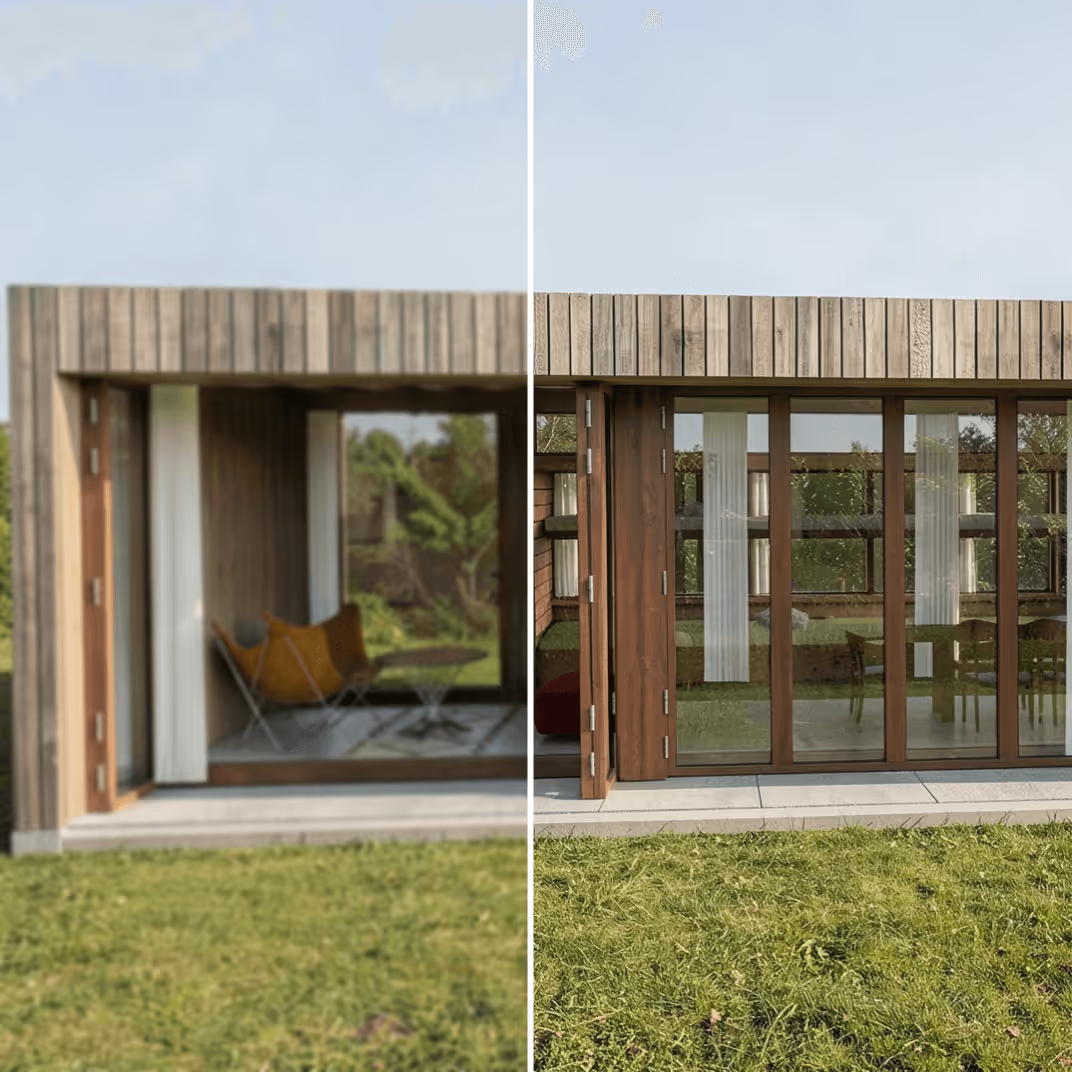
Renders and concept art are a special case. Hard edges and glazing reflections are exactly what smears at low resolution, and simple bicubic interpolation can’t bring them back.

    Best Practices für Prompts

    SketchUp model

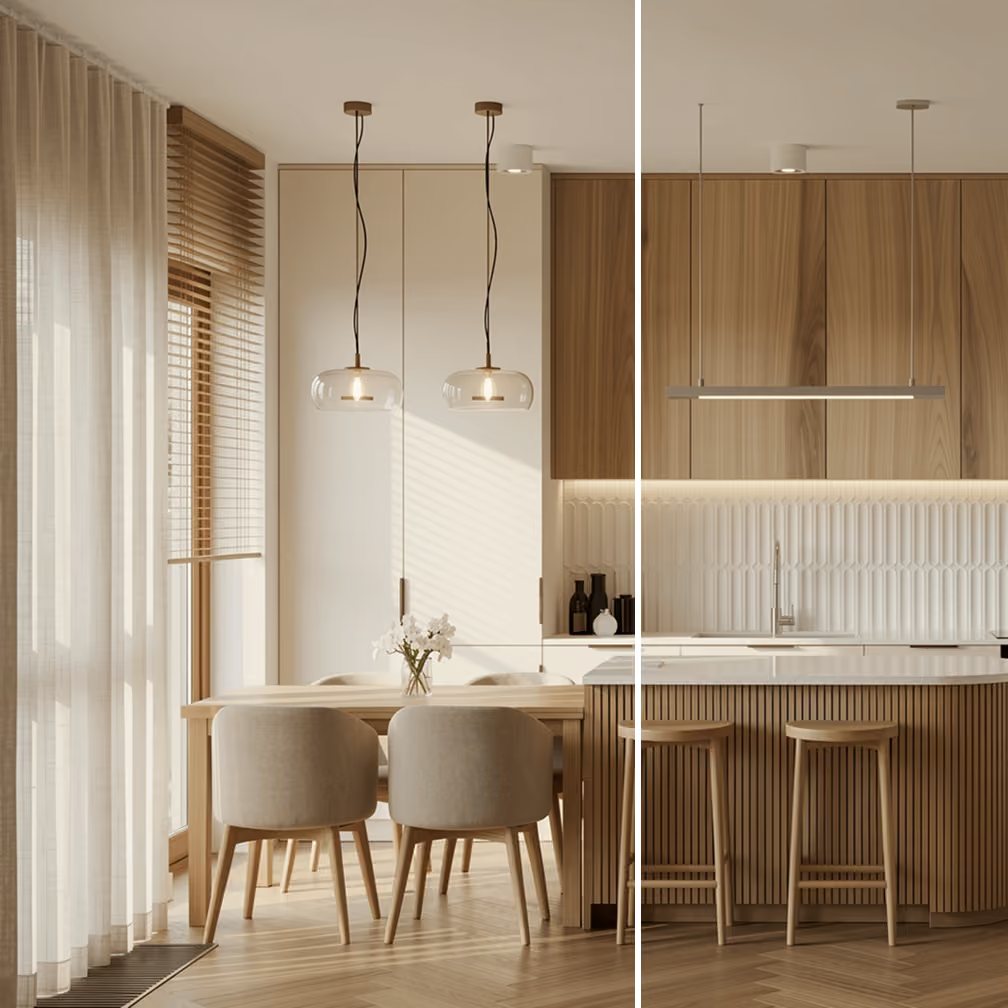
    Adds detail instead of stretching pixels

    The AI upscaler model was trained on of low- and high-resolution images, so it fills in texture and edge detail rather than averaging neighboring pixels. You can see the difference in things like grout lines and wood grain, which stay crisp instead of blurring out.
    MyArchitectAI app interface

    Generates a style-faithful output

    The upscaler sharpens what’s already there without repainting anything. Color and composition stay put. Your image comes back as a cleaner version of itself.
    AI rendered image

    Optimized for architecture and interior design

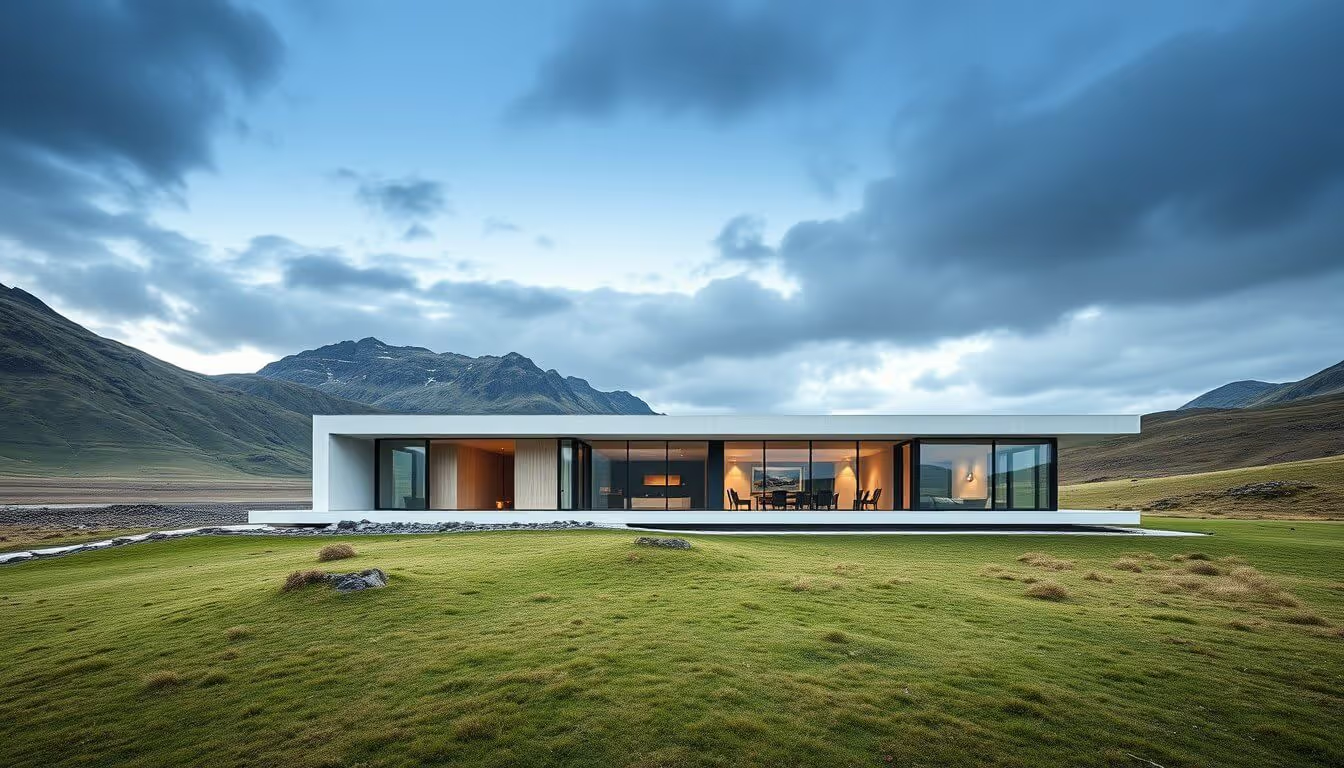
    MyArchitectAI's upscaler handles renders from SketchUp, Lumion, Enscape, and Twinmotion, plus anything straight out of Gemini. Hard geometry and linework stay intact instead of getting the “oil painting” softening that general-purpose upscalers apply.

    What people use it for

    Most Z-Image users who end up here fall into one of these situations.

    Client presentations and pitch decks

    A 1024px image looks soft on a 4K screen or when projected in a boardroom. Upscaling before you export the PDF means the renders hold up where it matters.

    Print portfolios and brochures

    A4 print at 300 DPI needs roughly 2480 × 3508px. A 1024px image printed that large looks pixelated. 4x upscaling closes that gap without a reshoot.

    Real estate listings

    Property portals penalize low-resolution photos in their ranking. An upscaled interior or exterior render reads better than the same image at 1K, especially on listing detail pages.

    Competition boards

    Architecture competitions usually specify minimum image sizes. If your Z-Image renders came out at 1K, upscaling to 4K before compositing into the board avoids quality mismatches.

    Social media and editorial

    Instagram, Behance, and design publications prefer images at 2048px or wider. Upscaling your Z-Image outputs means it fills the frame instead of getting centered with white bars.

    Pre-press and signage

    Banners and site hoardings print at low DPI but at very large sizes, so the pixel count still needs to be high. 4x from 1K covers most mid-size signage.

    Integrieren Sie den KI-Texturgenerator von MyArchitectAI in Ihre App

    Bieten Sie Nutzern eine blitzschnelle Texturgenerierung und Rendering-Erfahrung ohne Komplexität oder Wartezeiten mit einem einzigen API-Aufruf. Integration in weniger als einer Stunde.

    Archicad-Rendering einer modernen Villa

    Weitere kostenlose KI-Generatoren

    Midjourney Upscaler

    Flux Upscaler

    Qwen Image Upscaler

    Twinmotion AI Enhancer

    SketchUp architectural rendering of an apartment building

    KeyShot AI Enhancer

    Nano Banana Upscaler

    KI-Architektur-Generator

    SketchUp-Architektur-Rendering eines Mehrfamilienhauses

    KI-Innenarchitektur-Generator

    KI-generierter Küchenentwurf — ein Beispielentwurf

    KI-Schlafzimmer-Design-Generator

    SketchUp-Architekturvisualisierung eines Mehrfamilienhauses

    Frequently asked questions

    What resolution does Z-Image Turbo generate at?
    The sweet spot is 1024×1024, defaults land around 1024×1536, and the hard maximum is 2048×2048, about 4MP. There’s no native upscaling in the model, which is why a separate upscale pass is the standard last step in most Z-Image workflows.
    Is this the official Z-Image upscaler?
    No. This tool is made by MyArchitectAI and has no connection to Alibaba or Tongyi Lab. There is no official Z-Image upscaler; the model ships without one. Ours works on images from Z-Image, Z-Image Turbo, or any other generator.
    What upscaling model does this run?
    Our own custom-trained super-resolution model, running at 2x or 4x. It does faithful upscaling: it sharpens what’s there rather than re-diffusing the image, so your composition doesn’t drift.
    Is there an API?
    Yes. The upscale endpoint that powers this page is available to developers, so you can batch Z-Image outputs or build 4K export into your own tool. The API docs cover endpoints, auth, and limits.
    Is it really free?
    Your first upscale is free, full-resolution download included, with no account. Both 2x and 4x are available on that first use. After that you need a subscription. Most tools in this category make you sign up for credits before you see anything; here you can test the quality on your own image first.
    Can I use upscaled images commercially?
    From our side, yes. We claim no rights to anything you upload or download. Z-Image itself is Apache 2.0, which permits commercial use of outputs; check Tongyi Lab’s license notes if your case is unusual.
    Does it work on renders from SketchUp, Revit, or Lumion?
    Yes. It handles renders exported from SketchUp, Revit, Lumion, Enscape, or Twinmotion, plus Nano Banana, Midjourney, and Stable Diffusion outputs. The page name aside, it isn’t limited to Midjourney images. Renders are actually one of the better use cases because hard geometry and glazing survive the process instead of getting softened.