
A still render is great, but motion multiplies every impression. It lets your client feel a space before it exists, which is why more firms are commissioning 3D architectural animation services for big pitches and off-plan launches.
Hiring a studio gets you cinema-grade results. It also costs real money and takes weeks, so it pays to know who is genuinely good and what you are actually paying for.
This guide rounds up the best 3D architectural animation services in 2026, and untangles the format names that always get mixed up. Further down, you will find what the work really costs and when creating animations yourself with AI is the smarter move in most cases.
Before you shortlist any service providers, here is what separates a safe bet from a headache:
People throw these words around like they mean the same thing. They do not, and knowing which one you want keeps your brief clear and your quote accurate when you approach a studio.
In short, an animation is the umbrella. A walkthrough keeps the camera at eye level, while a fly-through takes things into the air for that drone-style sweep. A virtual tour works differently again, since the viewer controls where they go, which makes it interactive by design. Plenty of 3D architectural walkthrough services bundle several of these into one package.
Each of these architectural animation studios works at a seriously high level, but they are far from interchangeable. A studio built for cinematic hero films runs very differently from one built to render a whole masterplan at volume, so match the studio to the job in front of you.
Best for: a flagship film that has to sell a trophy tower.
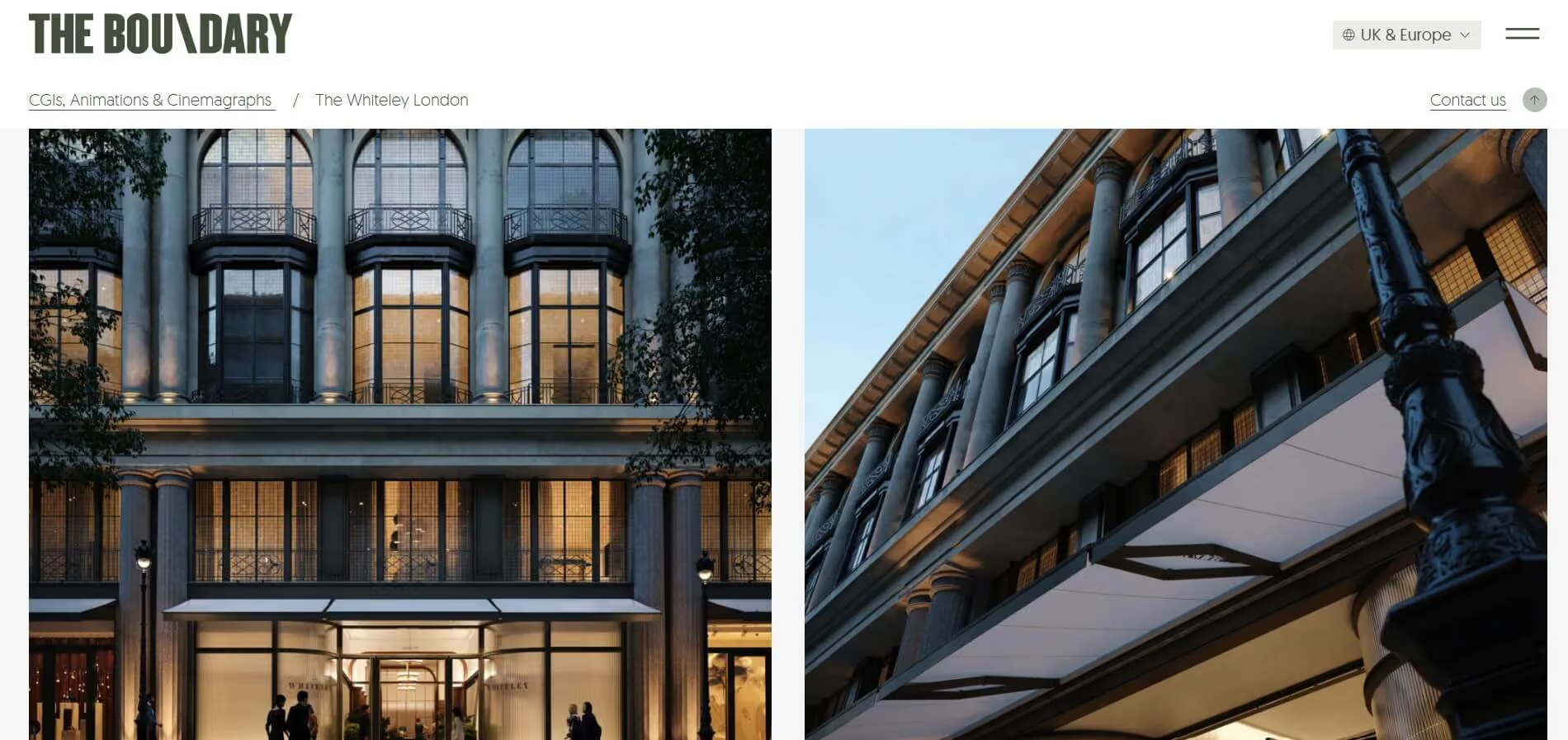
The Boundary is the name developers drop when a launch needs a hero film. Founded in London in 2014, it now runs two more studios in New York and Auckland with well over a hundred artists, and its client list reads like a Pritzker roll call.
Expect cinematic CGIs, films, virtual tours, and digital twins, all wired into the studio's own off-plan sales platform, Realspace. This is top-of-market work, so come with a real budget and a project worth the production.
Based in: London, with studios in New York and Auckland.
Best for: a full brand campaign with the film as its centerpiece.

DBOX treats a building like a brand, hence the animation usually arrives wrapped in a visual identity and a full marketing campaign around it. Founded in 1996 by architects, it works across New York, London, Miami, and Budapest, and its brand films collect awards on a regular basis.
The recent Bugatti Residences film, made with real-time virtual production, shows where the studio is heading. If you want one team handling the story and the visuals together, this is a strong fit. DBOX even produced the launch film for The Ellinikon on the Athens Riviera, if you want a closer reference.
Based in: New York, with studios across three continents.
Best for: off-plan residential sales running across several markets.

Binyan calls itself an integrated content agency, and after more than 3,000 projects it has the range to back that up. The studio leans hard on storytelling, with lifelike people who make a space feel genuine.
Beyond film and animation, you also get VR and the off-plan marketing tools that sales suites run on. With offices in Sydney, Melbourne, Brisbane, New York, London, and Dubai, it is a practical pick, especially when your project sells in more than one region.
Based in: Sydney, with studios worldwide.
Best for: large US developments that need visuals and marketing under one roof.
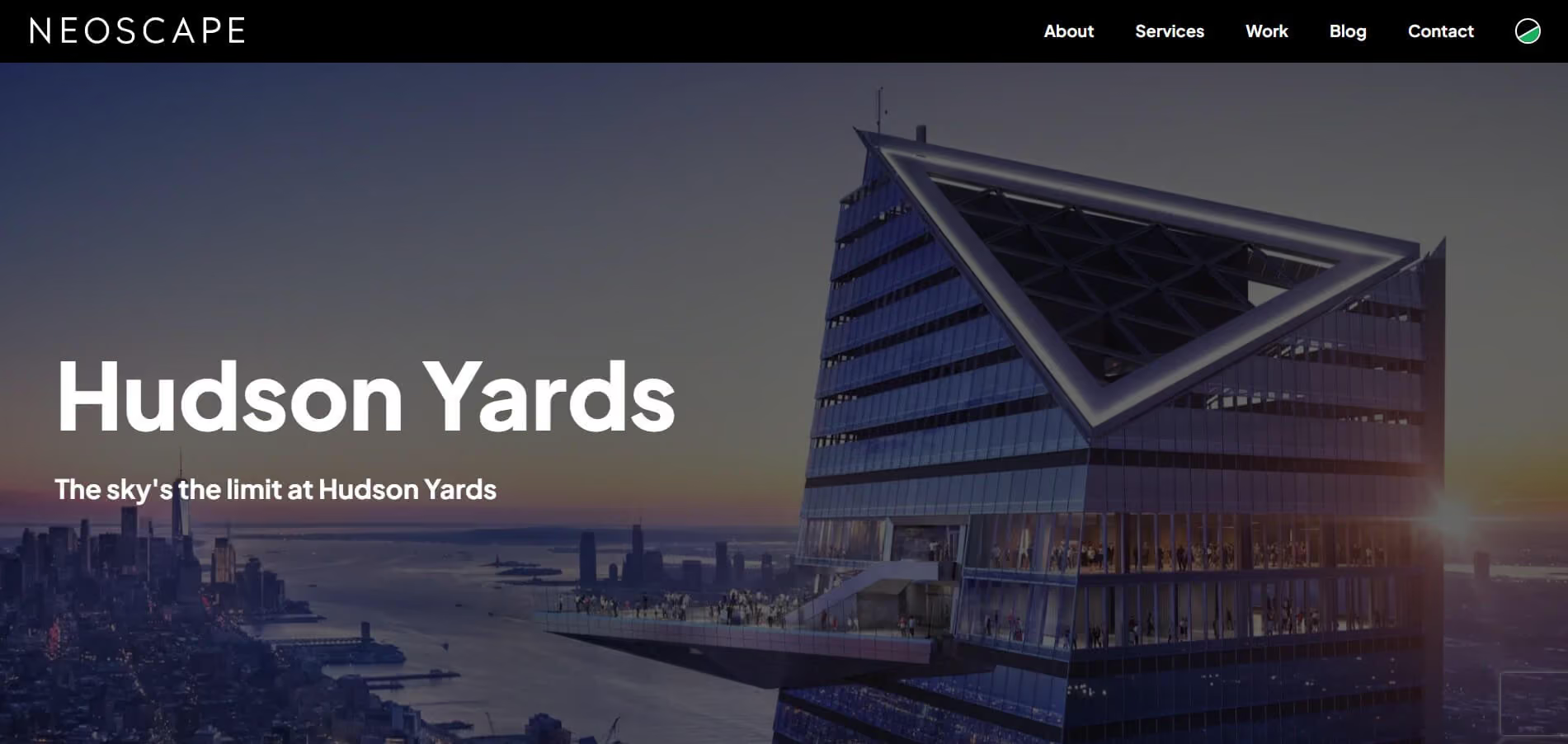
One of the longest-running names in the field, Neoscape has been visualizing the built world since 1995. Its roots in film and post-production are noticeable in the way its animations move.
The agency now covers branding, websites, AR, and interactive work alongside the core film and 3D. Architects like Safdie and developers like Related keep coming back to this one. If your project needs the visuals to plug straight into a wider campaign, Neoscape is built for exactly that.
Based in: Boston, with New York and Chicago studios.
Best for: an emotional, cinematic short film with real narrative.
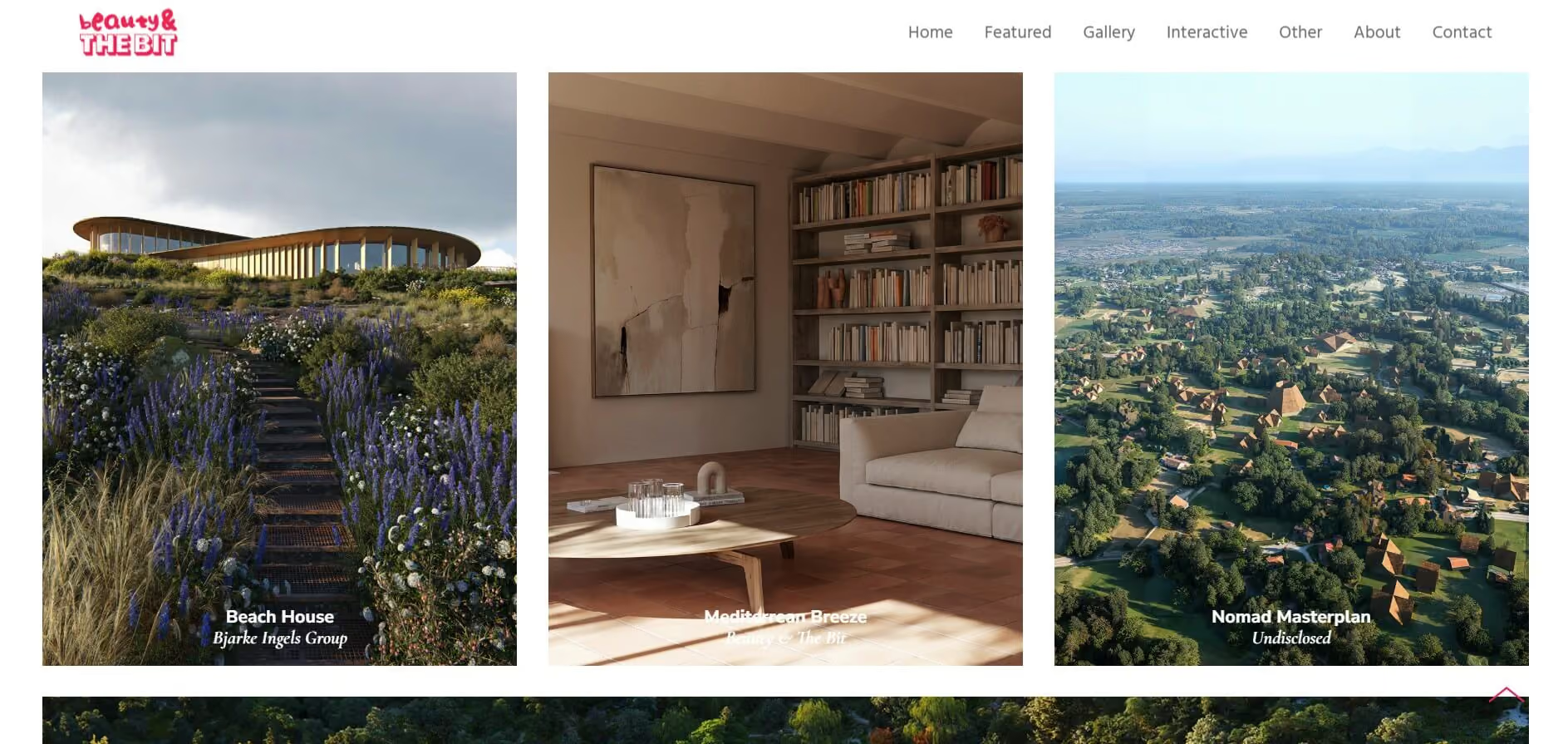
Beauty & The Bit, a Madrid boutique, is known for treating its work as architectural cinema, and it calls the results movies for a reason. Founded in 2012 by an architect who also directs in the videogame world, it pulls its language from film and matte painting.
Their work for Schmidt Hammer Lassen and Perkins & Will sits next to award-bait passion projects. We recommend this option when feeling matters more than a frame-by-frame tour of every room.
Based in: Madrid.
Best for: high-end animation that stays consistent across a big body of work.
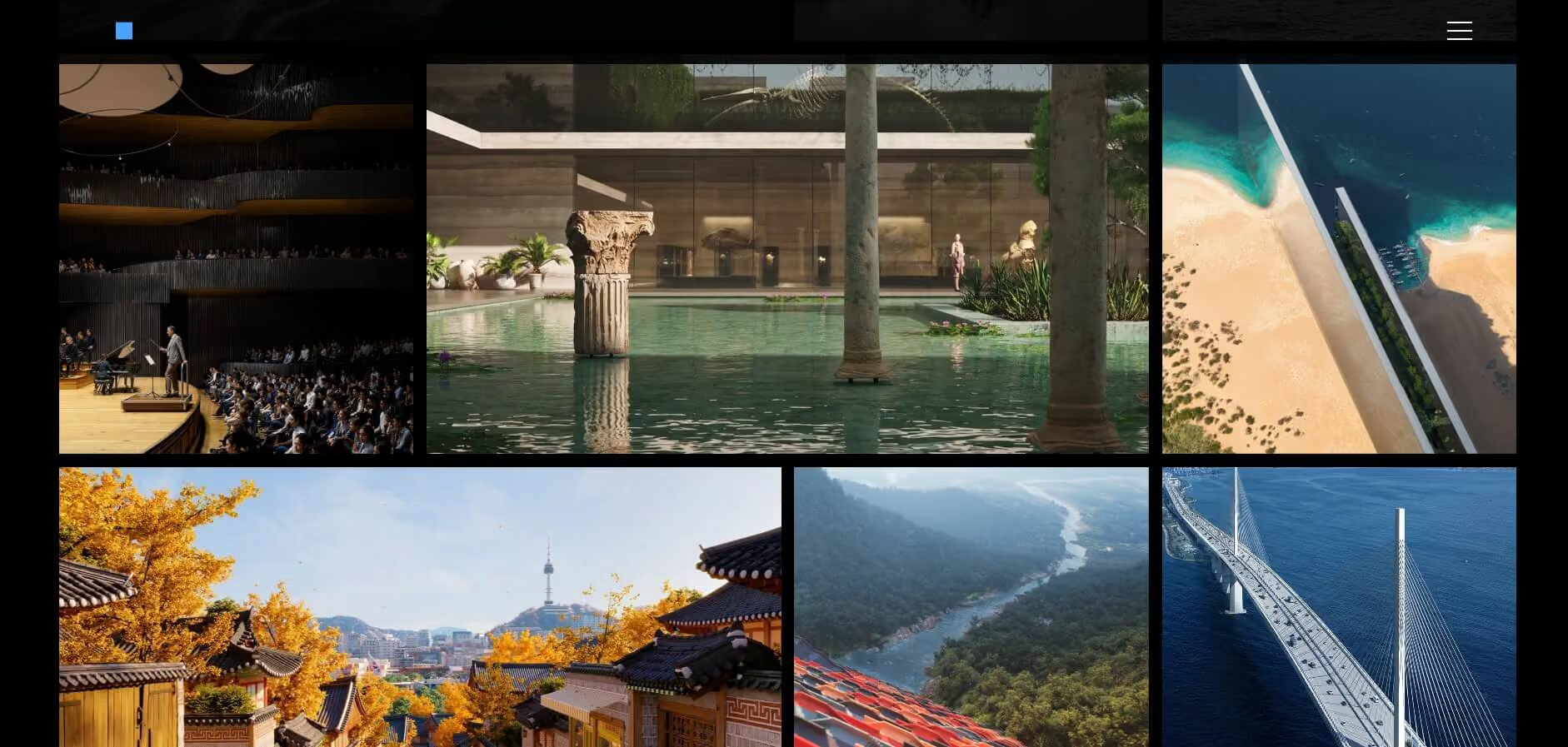
Brick Visual has grown from a Budapest apartment in 2012 into a hundred-strong studio with satellite offices around Europe. What developers rely on here is their consistency, since the team can hold one polished look across a huge volume of images and films with no oscillations in quality.
Its motion work increasingly leans on Unreal Engine, and the portfolio runs from Zaha Hadid concepts to Kengo Kuma residences. For a large rollout where every asset has to match, Brick is hard to beat.
Based in: Budapest, with studios across Europe.
Best for: story-led projects that mix film with interactive and real-time.

Kilograph came out of Los Angeles in 2009 and thinks of itself as a narrative studio first, a render shop second. Its founder is a trained architect with a visual-effects background.
The studio blends film and animation with interactive tools and immersive experiences. Its work skews toward public-facing projects, the kind where people need to remember a place, and it has done concept work for names like Netflix along the way. Good company when your project wants more than a flat video.
Based in: Los Angeles, with a studio in Spain.
Best for: master plans and big urban projects sold to investors and the public.
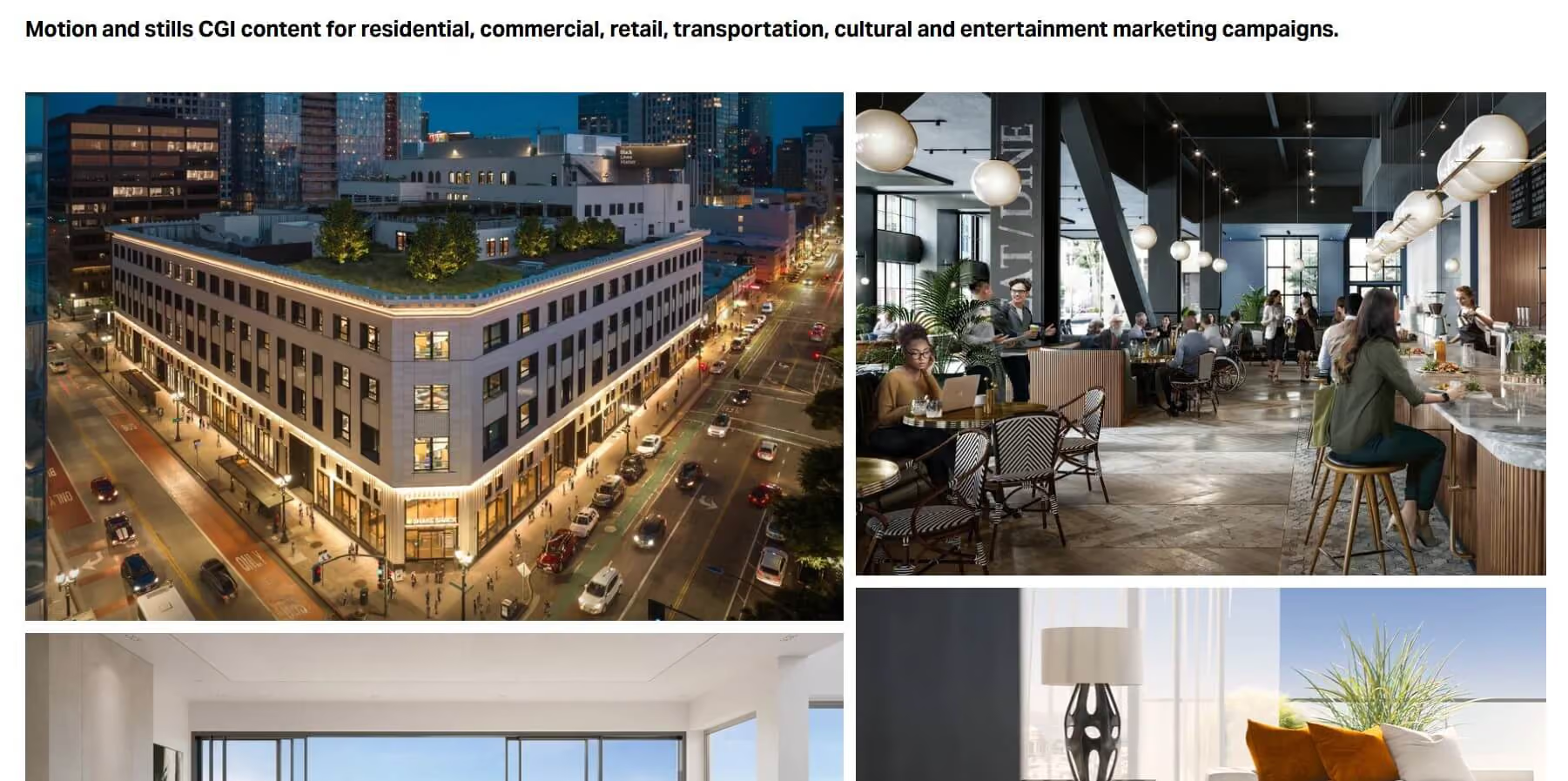
Steelblue, out of San Francisco since 2008, has built its name on scale. When a single tower is just one piece of a much larger plan, this is the team that keeps the masterplan readable and the context believable.
Its fly-throughs and films are a regular feature of civic presentations and investor pitches, with clients from SOM to the Golden State Warriors. The studio describes itself as design nerds and marketing strategists, which is a fair summary of what you get.
Based in: San Francisco.
Best for: award-winning films and VR walkthroughs from a tight boutique.

Just outside London, Arqui9 has quietly racked up two CGArchitect Visualisation of the Year wins. Founder Pedro Fernandes also runs a well-known teaching channel, so the craft runs deep.
For a small studio the range is wide, with cinematic films alongside VR and 360 walkthroughs all coming out of the same team. Recent work spans Zaha Hadid Architects and a Mercedes-Benz Places film, which tells you the quality holds up against far bigger names.
Based in: Surrey, near London.
Best for: a stills-grade visual bar, with the rare film to match.
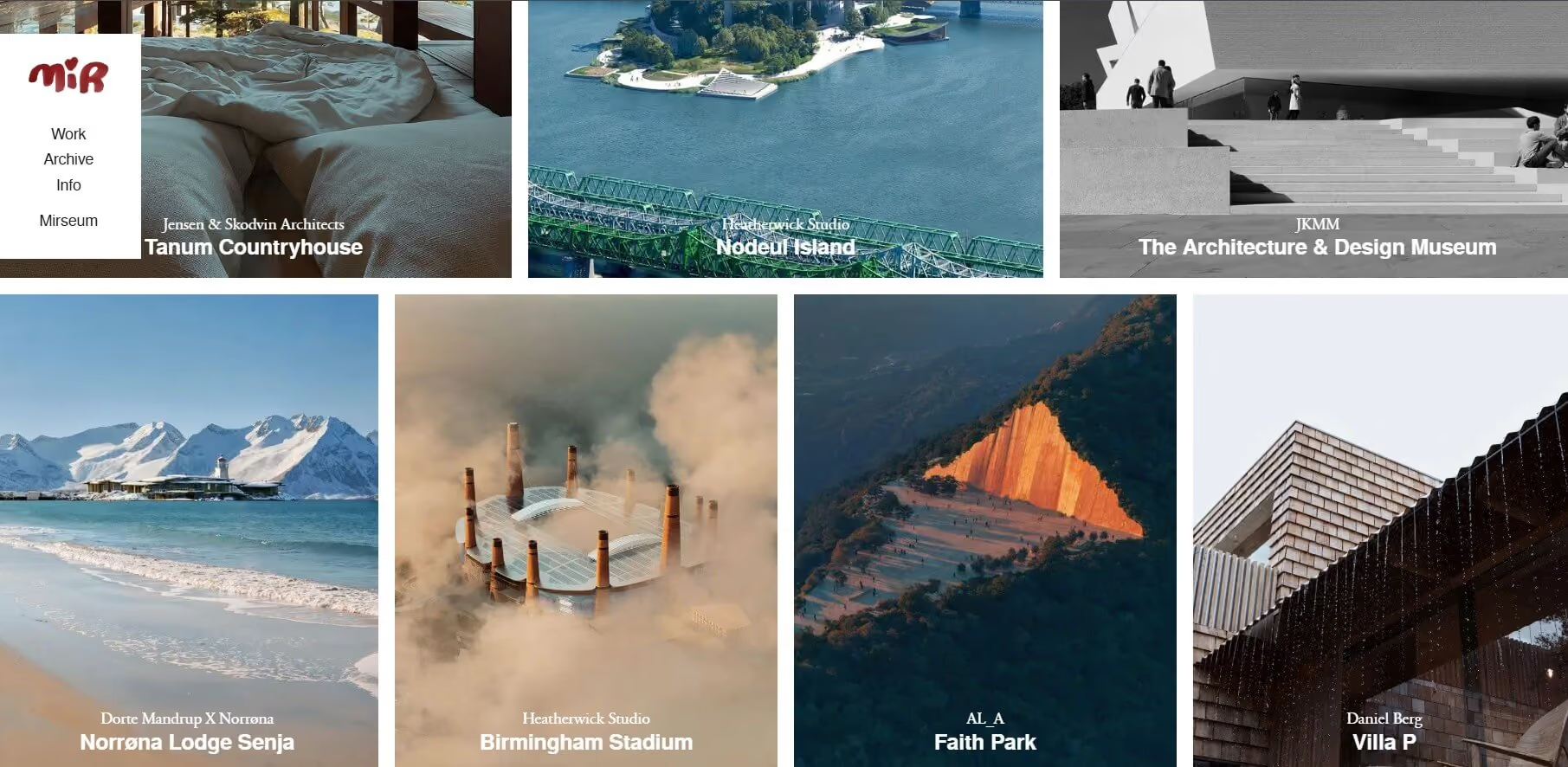
Mir is the studio architects name-check more than any other, famous for atmospheric, almost painterly images of unbuilt work. Based in Bergen and run since 2000 by its two founders, it stays deliberately small at around ten artists.
It works with the likes of Snohetta and BIG. Stills are its calling card, so the occasional film or animation it takes on carries that same reference-grade craft. Approach Mir when the visual bar is everything and you have the patience that boutique work asks for.
Based in: Bergen, Norway.
Most studios on this list do not publish prices, since every project gets scoped on its own. Still, industry pricing guides land in fairly consistent ranges, so here is a realistic picture for 2026.
Most studios price either by the second or by the finished minute. A few things push you up or down that range: length, how photoreal you need it, how much has to be modeled from scratch, and how fast you need it back. The marquee studios above sit at the very top, where a hero film for a major launch can run well into five or six figures.
Whatever the mainstream opinion, you do not need a studio for every single video. Of course, a cinematic film from one of these studios is the right call when the stakes are high with what you’re selling. But for everyday work, like early concepts and those dozens of iterations a project runs through, does paying per minute and waiting weeks really make any sense?
DIY with the right AI tool changes the math in the latter. MyArchitectAI runs in your browser, turns your SketchUp or CAD views into renders in about ten seconds, includes an animation feature, and all that with no render farm or pricey GPU. It is $29 a month for unlimited renders, $49 with videos included. There is a free plan to test it first.

Put that next to studio pricing to reveal how obvious the savings are. A single finished minute from a studio can cost thousands and take two to eight weeks. For less than the price of one studio render, a firm can produce a month of concepts and revisions in-house, even on the same day if needed. In that light, the smart split for most teams looks like this:
The best of these studios is simply the one that fits the job and the budget on the table. For a once-in-a-decade launch film, the premium architectural animation studios earn every cent. For the steady stream of visuals a working firm churns through, an in-house AI tool will save you thousands and weeks. Most teams end up using both, and that is exactly the point.
Not in any real way. ChatGPT is built for text and images, so it can help you write a creative brief or a shot list, and generate still images from a prompt. Producing a controlled 3D animation from your actual CAD model is a different job, and for that you need a studio or a purpose-built rendering tool.
With a studio, plan on roughly two to eight weeks, depending on the length and how detailed the scene is. A short, simple walkthrough sits near the bottom of that, while a polished cinematic film runs longer once you factor in revisions. An AI tool like MyArchitectAI flips that timeline completely, turning your views into engaging video clips in 60-90 seconds.
Yes, and you usually should. Most studios take your CAD or SketchUp files as the starting point and build from there. Cleaner models and clear references speed the whole thing up and keep the cost down, so it is worth tidying your file before you send it. Just check which formats each studio accepts first.

.webp)